

When a Case Is Built on Noise Instead of Proof
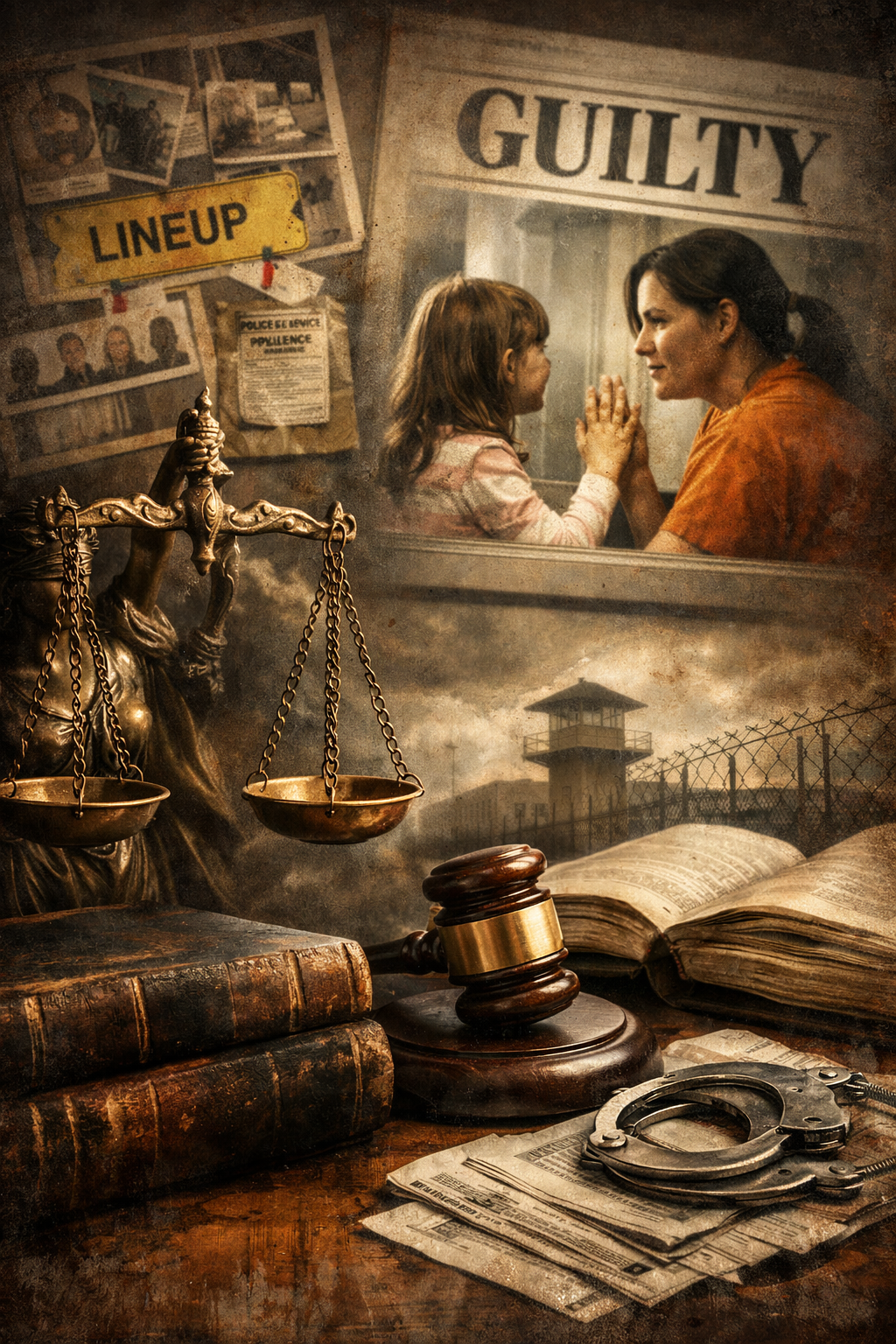
How panic, political pressure, and suppressed doubt turned a Head Start investigation into a wrongful prosecution that collapsed under its own record
By Aaron Christopher Knapp
Investigative Journalist | Lorain Politics Unplugged
Introduction: This Was Not a Failure of Hindsight. It Was a Failure of Will.
I am writing this because the record does not support the story Lorain County lived with for decades, and because the transcript makes something unavoidable once you stop skimming and actually read it. This case did not unravel because standards changed or because modern sensibilities are softer than those of the 1990s. It unraveled because the truth was visible early, documented often, and repeatedly ignored.
This was not a case where the system made one mistake and corrected itself too late. It was a case where the system made mistake after mistake, sometimes minor, sometimes catastrophic, often while being warned in real time, and then insulated those mistakes from scrutiny until the damage was complete. The warnings were not subtle. They were spoken out loud by investigators, preserved on tape, written into reports, and later echoed by judges who reviewed what the jury never saw.
The Head Start prosecutions did not fail quietly. They failed loudly, publicly, and repeatedly. They failed at the investigative stage when doubt was treated as inconvenience. They failed at the charging stage when pressure replaced proof. They failed at trial when key witnesses and exculpatory material were sidelined. And they failed again when the system resisted correction long after the record made continued certainty impossible.
What makes this case especially disturbing is not simply that mistakes were made. It is that many of the people who knew better were either pushed aside, ignored, or never called at all. Investigators with doubts were removed. Witnesses who could have anchored reality were left off the stand. Evidence that challenged the narrative existed but never reached the jury. And once panic took hold, the machinery of prosecution kept moving even as its own components signaled that something was wrong.
This article is not about hindsight. It is not about re litigating guilt or innocence through modern eyes. It is about documented decisions that appear in the transcript itself, spoken by the very people who were there, at the time, explaining what they saw, what they questioned, and what they were not permitted to fully present. It is about how a criminal case became louder than it was accurate, and how noise was allowed to stand in for proof until two lives were nearly erased.
That is not a tragedy of the past. It is a warning for the present.
The First Error Was Letting Panic Harden Into Narrative
From the outset, the allegations did not simply move faster than the evidence. They bypassed it. What began as a child’s statements, relayed through a parent, were almost immediately filtered through adult interpretation, repeated in increasingly graphic form, and then released into the public arena before investigators had completed even the most basic corroborative steps. The transcript makes clear that critical investigative work was still incomplete when the narrative solidified.
The alleged perpetrator description itself was unstable from the start. The child described a man named “Joseph” who was alternately characterized as a Black man with white spots, a man with discolored patches of skin, and a man with blue eyes. These are not minor inconsistencies. They are mutually conflicting descriptors that should have triggered heightened caution in any criminal investigation, particularly one involving very young children and serious allegations. Instead, the inconsistencies were absorbed into the story without resolution.
The physical evidence was nonexistent. The child claimed vaginal penetration with a stick, a claim that later reviewing judges and medical experts described as medically incompatible with the absence of injury or corroborating findings. Emergency room examinations did not produce evidence consistent with the allegations. No forensic confirmation followed. Despite the severity of the claims, the case advanced without physical proof.
The logistics of the alleged abuse were equally unsupported. The theory required a bright yellow Head Start school bus to repeatedly leave its assigned route, park in residential neighborhoods, transport children to multiple locations, and return without drawing attention. Investigators later acknowledged that no witnesses ever reported seeing a school bus parked in any of the neighborhoods identified by the children. No neighbors. No parents. No independent observers. As one investigator stated in the transcript, a school bus parked in a residential area would have stood out immediately. Yet no such sightings were ever documented.
Attendance records directly contradicted the timeline of the allegations. The children who claimed to have been abused together were not absent or late on the same days. Head Start records showed no overlap that supported group abuse occurring during school hours or transport. That contradiction was not peripheral. It went to the core of whether the alleged events could have occurred as described.
Crime scenes were never verified. Houses identified by children as locations of abuse did not match records or reality. No evidence was recovered from any of the purported locations. No physical trace connected the allegations to a place, a time, or a route.
Despite all of this, the case did not slow down. It escalated.
Once the accusations were made public, the transcript shows that the investigation entered a feedback loop driven by fear and visibility rather than verification. Parents organized meetings. Media coverage intensified. Additional accusations surfaced only after publicity spread. Investigators themselves described the situation as “mushrooming” into a circus atmosphere. That language matters because it came from inside the investigation, not from critics years later.
This is the first and most consequential structural failure in the case. When fear became public, restraint became politically expensive.
Slowing down to resolve contradictions risked appearing indifferent to children. Demanding corroboration risked being labeled dismissive. In that environment, caution was no longer viewed as professionalism. It was treated as obstruction. The system rewarded momentum over accuracy and decisiveness over discipline.
From that point forward, the investigation was no longer governed by whether the facts held together. It was governed by whether the narrative could be sustained. And once a criminal case reaches that stage, every subsequent decision, charging, witness selection, evidentiary disclosure, trial strategy, is distorted by the need to protect the story rather than test it.
When Detective Tom Cantu Did His Job and Ran Into a Wall
Detective Tom Cantu’s role in this case deserves sustained attention because his experience marks the precise point where investigative integrity collided with political demand, and where the system chose momentum over method. This is not speculation drawn from hindsight. It is laid out in the transcript, in Cantu’s own words, describing what he saw, what he questioned, and how his concerns were handled.
Cantu was the first investigator assigned to the allegations. From the outset, he encountered warning signs that any trained investigator would recognize as reliability problems requiring caution and control. When he attempted to interview the child, the mother answered questions for her. That alone should have triggered concern, because best practice in child interviews is to minimize adult influence precisely to avoid suggestion or contamination. When Cantu redirected questions to the child herself, the responses were not clear accusations but uncertainty. “I don’t remember.” “I don’t know.” Hesitation. Silence. These are not confirmations. They are signals that memory is unstable or that the child is responding to pressure rather than recalling independent events.
Cantu’s doubts did not stop there. Physical examinations produced no corroboration of the alleged abuse. The child described penetration with a stick, yet medical evaluations did not support that claim. Locations identified by children as places where abuse occurred did not align with records or physical reality. The theory of the case required repeated transportation of children to multiple locations, yet records did not support the timeline being claimed.
Head Start attendance records did not show the children absent or late together on the same days, even though the allegations required group abuse occurring during school hours or transport.
These are not peripheral inconsistencies. They go to the core of whether the alleged crimes could have occurred as described. At that stage, a careful investigation would slow down, isolate variables, and insulate witnesses from outside influence. That is what investigative integrity looks like.
Instead, the investigation collided with politics.
According to the transcript, Cantu was summoned to the mayor’s office while the case was still barely underway. What he walked into was not a briefing or a request for information. It was a confrontation. People were yelling. Profanity was being used. There were demands for an arrest before the investigation had reached even preliminary conclusions. The atmosphere was so volatile that Cantu says he had to call in his supervisor, the chief of investigations, to deescalate the situation.
This is the moment where the case changed character.
Only after tempers cooled was Cantu “allowed” to continue investigating. That word is not incidental. It reveals that investigative independence had already been compromised. Investigators do not require permission from political leadership to follow evidence. When permission becomes part of the process, the message is clear. There is an expected outcome, and the investigation is expected to serve it.
That pressure environment did not end at the mayor’s office.
Cantu later states something even more troubling. Based on what he observed, he believed the case should be dropped. He thought it had been. Then he was promoted and removed from the case.
Det. Tom Cantu
New detectives were assigned. They never consulted him about his findings. They never asked him to walk them through the inconsistencies he had documented. He was never called to testify at trial. The jury never heard from the first investigator who questioned the reliability of the allegations.
That omission cannot be brushed aside as an oversight. In an adversarial system, the point of trial is to expose doubt, test credibility, and allow factfinders to weigh competing interpretations. Removing the investigator who raised early doubts, and then proceeding without ever putting those doubts before a jury, is not neutrality. It is suppression by structure.
Cantu himself states plainly that he believes he could have influenced the jury had he been allowed to testify. That statement matters, not because it proves innocence by itself, but because it underscores what the jury was denied. They were denied the opportunity to hear that the first investigator on the case did not find the allegations reliable, did not find corroboration, and did not believe the case should proceed.
This was not a personal failure by one detective. Cantu did his job. He documented inconsistencies. He questioned reliability. He recommended restraint. What failed was the institution around him. The system did not surface his doubts. It absorbed them, sidelined them, and moved forward as if they did not exist.
When a criminal case reaches the point where investigative skepticism is treated as an obstacle rather than a safeguard, the outcome is no longer tethered to truth. It is tethered to pressure. And once that happens, the question is no longer whether mistakes were made. The question becomes how many warnings were ignored before the damage was done.
The Mayor as Pressure Point, Not Safeguard
And Why Jack Bradley’s Dual Roles Still Matter
One clarification is essential before this section goes any further, because accuracy matters more than rhetoric. Jack Bradley was not the mayor at the time of the original investigation and prosecution. At the time these events unfolded, Bradley was acting as defense counsel, and he would not become mayor of Lorain until years later. That distinction does not weaken the analysis. It sharpens it.
The transcript places Bradley at a critical pressure point in the case, not because of an elected title he held at the time, but because of the authority, access, and influence he exercised within the system while the investigation was still active. What matters here is not the later office he would hold, but the way institutional power was already intersecting with an unfinished investigation in a way that distorted its trajectory.
According to the transcript, Detective Tom Cantu was summoned into an environment where emotions were already running hot, where accusations were being treated as settled fact, and where demands for arrests were being voiced before the investigation had reached any evidentiary conclusion. The setting may later be described in shorthand as “the mayor’s office,” but the substance of what occurred is the same regardless of title. This was not a neutral legal consultation. It was a pressure cooker.
Even assuming good intentions, and even accounting for Bradley’s role as defense counsel rather than mayor at the time, the effect was identical. Investigative independence was compromised by proximity to power. Urgency for an outcome displaced patience for proof. The message conveyed, implicitly if not explicitly, was that delay was unacceptable and resolution was expected.
That dynamic is precisely what institutional safeguards are meant to prevent.
Whether the pressure originates from an elected official, a politically connected attorney, or a public figure with access to decision makers, the danger is the same. When an investigator is summoned into a volatile, adversarial environment before the facts are settled, the investigation is no longer insulated from narrative. It becomes reactive. Evidence gathering turns into damage control. Skepticism becomes inconvenient.
The transcript makes clear that after this confrontation, Cantu was only “allowed” to continue investigating once tempers cooled. That language does not describe a healthy separation of roles. It describes an investigation proceeding under watch, rather than under law. Investigators are not supposed to need permission from politically connected actors to follow evidence. When they do, the system has already failed one of its most basic tests.
What followed shows how that pressure reverberated outward.
Once the story became public, the case took on a life of its own. Meetings were organized among parents. Media coverage intensified. Fear spread rapidly through the community. Additional accusations surfaced almost immediately after publicity increased. Even investigators themselves described the situation as “mushrooming” into a circus atmosphere. That description did not come from critics years later. It came from inside the case, in real time.
At that point, the investigation was no longer about sorting truth from falsehood. It was about managing a narrative that had already escaped containment. The system did not pause to reassess whether the foundation was sound. It adjusted to the noise. It absorbed the panic. And it proceeded as though the volume of accusation could substitute for the absence of corroboration.
Bradley’s later ascent to the mayor’s office gives this history additional weight, not because it retroactively assigns blame, but because it illustrates how closely intertwined legal, political, and institutional power already were in Lorain long before the title changed. The same system that later governed the city had already shown, in this case, how poorly it handled pressure when fear and politics entered the room.
This is not an argument about personal motive. It is an argument about structure. When individuals who move fluidly between legal practice and political office are present at the earliest stages of a volatile criminal case, and when their involvement coincides with demands for rapid resolution rather than disciplined investigation, the result is predictable. The investigation bends. Doubt is sidelined. And the narrative hardens long before the truth has been tested.
That is what happened here. And once that happened, the rest of the case followed a path that became harder and harder to correct, until correction finally arrived decades later, at an almost unimaginable human cost.
The Witnesses Who Could Have Anchored Reality and Never Did
One of the most indefensible mistakes in this entire case is also one of the most basic, and that is precisely why it matters. This was not a complex forensic failure or an obscure legal misstep. It was a failure to ask the most obvious question of the most obvious people.
Nancy Smith did not drive that Head Start bus alone. According to her own statements, and according to standard Head Start transportation policy at the time, buses were not permitted to operate without an aide present. This was not optional staffing. It was a safety requirement. Smith identified the aide who was with her on the bus. Detective Tom Cantu noted the aide’s name in his report. And then the record goes silent.
The bus aides were never meaningfully pursued as investigative witnesses. They were not interviewed in a way that tested the core allegation. They were not treated as corroboration or contradiction points. Most importantly, they were never put in front of the jury. Later, those aides would state on the record that they wanted to testify, that they expected to testify, and that they actively asked to testify on Smith’s behalf. They say they were never called.
If the central theory of the case was that children were transported off route, taken to residential locations, and abused during the course of a school day, then the second adult on the bus is not a peripheral witness. That person is the case.
The aide would have been present for route deviations. The aide would have observed whether the bus stopped at unauthorized locations. The aide would have known whether children were removed from the bus. The aide would have been able to confirm or deny whether any of the alleged conduct occurred during transport. This is not subtle. This is not technical. It is binary. Either the aide confirms the allegation or the allegation collapses.
There is no middle ground where the aide’s testimony is merely cumulative or optional.
By choosing not to call those witnesses, the prosecution removed the one category of testimony that could have anchored the case in observable, adult reality rather than mediated child statements. The jury was asked to evaluate extraordinary claims without hearing from the only neutral adults positioned to observe whether those claims could have occurred. That is not how reliability is tested. That is how uncertainty is preserved.
This decision also compounded other failures already present in the case. There was no physical evidence. There were no verified crime scenes. There were no attendance records supporting the timeline. There were no independent witnesses who observed a school bus parked in residential neighborhoods. The bus aides were the last remaining point where theory could have been tested against lived fact. When they were excluded, the case became almost entirely insulated from contradiction.
The aides themselves later described this exclusion as baffling. They stated they were prepared to testify. They stated they were present during the relevant time periods. They stated that the alleged conduct never occurred. Yet the jury never heard from them. The public never heard from them. Their absence became part of the architecture of the conviction.
This was not an evidentiary technicality. It was not a marginal call about witness order or emphasis. It was a choice to proceed without the most grounded testimony available. And when a prosecution proceeds by excluding the witnesses most capable of disproving its core theory, the resulting verdict cannot credibly claim to be the product of a fully tested truth.
In a system that values accuracy over appearance, those aides would have been central witnesses. In this system, they were inconvenient ones. And the difference between those two approaches is the difference between an investigation and a narrative.
That choice, more than almost any other in this case, explains why the convictions later collapsed when the full record was finally examined. The truth had always been accessible. It was simply never allowed into the room.
Suppressed Doubt and the Evidence the Jury Never Saw
How Ineffective Counsel Allowed the Case to Be Tried Without Its Most Damaging Facts
One of the most consequential failures in this case was not committed by investigators or prosecutors alone. It was enabled, cemented, and effectively ratified by ineffective defense counsel, and that failure sits squarely at the feet of Jack Bradley.
The transcript describes a lineup videotape that the jury never saw, and that omission alone should stop any honest analysis in its tracks. The tape shows a child hesitating for an extended period of time, unable to identify anyone in the lineup, visibly uncertain and resistant. It is only after her mother intervenes, physically and verbally directing the process, that a selection is made. This is not a close call. This is not ambiguous. This is a textbook example of suggestion contaminating identification.
That videotape was not shown to jurors. It was not meaningfully confronted at trial. It was not used to challenge the reliability of the identification that became central to the prosecution’s case.
That failure cannot be attributed solely to prosecutorial discretion or judicial rulings. A competent defense does not passively accept the exclusion of evidence that directly undermines the credibility of the state’s witnesses. A competent defense litigates it, preserves it, and forces the issue into the record. That did not happen here.
The same pattern appears again with pre trial statements containing exculpatory information. According to the transcript, the prosecution itself realized mid trial that these statements contained material favorable to the defense. Yet they were never played for the jury after judicial denial. Once again, the defense failed to ensure that the jury heard evidence that went directly to the heart of reasonable doubt.
These were not marginal pieces of evidence. They were not cumulative. They were not distractions. They were central.
The lineup tape directly challenged whether the child’s identification was independent or manufactured. The suppressed statements directly challenged whether the allegations were spontaneous or shaped through adult reinforcement. Together, they formed a coherent alternative explanation for the accusations, one grounded not in speculation but in recorded fact.
And yet the jury was denied that context.
That denial did not occur in a vacuum. It occurred in a trial where defense counsel failed repeatedly to force the record open. Failed to compel the admission of impeachment evidence. Failed to confront the prosecution’s narrative with the tools that existed to dismantle it. Failed to do the most basic thing a defense lawyer is required to do in a case of this magnitude, which is to ensure that doubt is not merely present, but visible.
When jurors are told to “just go back to the children,” without being shown how those statements were produced, shaped, reinforced, and at times directed by adults, the adversarial process collapses. The jury is not weighing evidence. It is being asked to accept a story stripped of its context.
That collapse does not happen accidentally. It happens when defense counsel does not perform the role the Constitution requires. Ineffective assistance of counsel is not defined by bad intentions or laziness. It is defined by outcomes like this, where readily available, outcome determinative evidence never reaches the jury because the defense fails to make it unavoidable.
Jack Bradley’s role as defense counsel in this case cannot be treated as incidental. He was not a passive observer. He was the legal professional charged with protecting Nancy Smith’s rights at trial. He was responsible for ensuring that exculpatory evidence was not merely acknowledged, but fought for. He did not do that. And the consequences were catastrophic.
This is not a matter of Monday morning quarterbacking. The importance of lineup integrity, impeachment evidence, and exculpatory statements was well established long before this trial took place. The failures here were not novel. They were basic.
The jury never saw the most damaging evidence against the prosecution’s theory, not because it did not exist, but because the defense did not force it into view. That is the definition of ineffective counsel. And when ineffective counsel intersects with political pressure, prosecutorial tunnel vision, and public panic, the result is not just a flawed trial. It is a wrongful conviction waiting to happen.
In this case, it happened.
The Cost of Tunnel Vision
When Pressure Replaced Proof and the System Talked Itself Into Exposure
At trial and in later public defenses of the prosecution, the assistant prosecutor returned to a single refrain. There were many children. There were many parents. The volume of testimony, he argued, proved the strength of the case. That logic is seductive in moments of fear, but it is also profoundly dangerous. Quantity is not reliability, especially not in an environment saturated with media attention, adult reinforcement, and public panic. Repetition does not cure contamination. It amplifies it.
The transcript ultimately confirms what years of post conviction review would later make undeniable. There was no physical evidence corroborating the allegations. There was no logistical proof that a school bus repeatedly deviated from its route without detection. There was no consistent identification of the alleged perpetrator. There were no verified crime scenes tied to the accusations. There were no neutral adult witnesses confirming that the core conduct ever occurred. Every traditional anchor of reliability was missing.
What existed instead was pressure. Pressure from frightened parents. Pressure from public meetings. Pressure from media coverage. Pressure to act decisively rather than carefully. That pressure did not merely surround the case. It shaped it.
Nowhere is that more evident than in the strange and ultimately self destructive role played by Chief Cel Rivera in the post conviction phase. According to the transcript, Rivera met repeatedly with Amber, Nancy Smith’s daughter, positioning himself as someone trying to help unravel what had gone wrong. He spoke openly about the weaknesses of the case. He expressed doubts about its reliability. He suggested that the prosecution had been driven by political considerations and public outrage rather than evidence.
Most astonishingly, Rivera instructed Amber on how to use a tape recorder. He advised her to record witnesses. He demonstrated the device. He encouraged documentation.
And then he spoke freely.
Amber did exactly what she had been taught to do. She recorded Rivera himself. On those recordings, Rivera appears to acknowledge that the case was not good, that it was not reliable, and that it moved forward anyway. When those recordings surfaced, they did not merely embarrass the department. They exposed the extent to which tunnel vision had taken hold at the highest levels.
Rivera later expressed outrage that he had been recorded. He denied key statements. He portrayed himself as betrayed. But that reaction raises a question that cannot be dismissed lightly.
What did he think would happen when he handed a tape recorder to a young woman, instructed her to record conversations, and then continued to speak candidly about the case?
It strains credulity to believe that the possibility of recording never crossed his mind. At a minimum, it reveals a level of cognitive dissonance that is itself a product of tunnel vision. When an institution becomes convinced of its own narrative, even those who privately doubt the outcome begin to behave as though the risk of exposure no longer applies to them. The system talks itself into believing it is safe from scrutiny.
That is what tunnel vision does. It narrows focus so completely that contradictions feel harmless. Warnings feel manageable. Records feel containable. People begin to speak as though context no longer matters because the outcome is already fixed.
The Rivera recordings matter not because they prove intent or malice, but because they show how deeply the case had detached from evidentiary discipline. When the chief of police is simultaneously acknowledging that a case is weak and expressing surprise that those acknowledgments might become public, the system is no longer operating with internal checks. It is operating on assumption and momentum.
This is the true cost of tunnel vision. It does not just produce wrongful convictions. It corrodes judgment at every level. It convinces prosecutors that numbers equal truth. It convinces leaders that pressure justifies shortcuts. It convinces officials that doubt can be managed rather than confronted. And eventually, it convinces people that the record will never be read in full.
In this case, it was. And when it finally was, the story collapsed under its own weight. Not because standards changed, but because the truth had been there all along, buried beneath noise, repetition, and the collective refusal to slow down.
Pressure built the case. Tunnel vision sustained it. And when the recordings emerged, the system was forced to confront something it had spent years avoiding. The problem was never a lack of evidence. It was the decision to stop looking for it
.
The Prosecution as Witch Hunt:
How Jonathan Rosenbaum Turned Panic Into a Career Case and Pulled an Entire Power Structure Along With Him
Before the system ever admitted what it had done, before judges intervened and apologies were spoken in open court, there was a phase of this case that must be confronted head on. That phase is the prosecution itself, led by Jonathan Rosenbaum, and the culture around it that rewarded aggression over accuracy and spectacle over restraint.
Rosenbaum did not merely prosecute this case. He embraced it as a cause. According to the transcript and contemporaneous reporting, he was known as aggressive, relentless, and uncompromising.
In another context, those traits might be described as diligence. In this context, they became fuel. This prosecution did not unfold like a measured pursuit of truth. It unfolded like a moral crusade, one in which doubt was treated as betrayal and skepticism as complicity.
The record shows that Rosenbaum’s theory of the case rested almost entirely on volume. More children. More parents. More repetition. The jury was told, explicitly, to “just go back to the children.” That was not an evidentiary instruction. It was a directive to disengage from corroboration and surrender to emotion. It asked jurors to treat consistency as proof without examining how that consistency was produced, reinforced, or contaminated.
That approach did not arise in a vacuum. It thrived because it was politically and professionally rewarded.
At the time, Lorain was steeped in fear driven by national daycare panic narratives. Prosecutors who appeared tough on child abuse were not questioned. They were elevated. Lawyers who raised concerns were not praised. They were marginalized. Elected officials did not caution restraint. They aligned themselves publicly with outrage. Careers were made by standing on the side of accusation rather than proof.
This case became a career accelerant, not just for Rosenbaum, but for a network of legal and political actors who understood exactly what was expected of them. Silence or skepticism carried risk. Zeal carried upside.
What makes this phase of the case so corrosive is that the warning signs were not hidden. They were visible. The initial investigator doubted the case. Physical evidence did not exist. Identification was compromised. Neutral adult witnesses were excluded. Attendance records contradicted the theory. Yet the prosecution did not recalibrate. It doubled down.
That is not prosecutorial judgment. That is tunnel vision weaponized by ambition.
Rosenbaum’s refusal to engage with contradictory evidence, his reliance on emotionally charged testimony stripped of context, and his willingness to proceed without physical or logistical corroboration did not merely risk injustice. It institutionalized it. Once the prosecution framed the case as children versus monsters, any challenge to that frame became professionally dangerous. Lawyers, judges, and elected officials were forced into a binary choice. Join the hunt or be suspected of protecting the accused.
Many chose to join.
And that choice matters now.
Because when the case finally collapsed, it did not collapse due to a technicality or a clever procedural maneuver. It collapsed because the full record, once examined, made the prosecution indefensible. Medical experts concluded the allegations were impossible. Judges concluded the children had been led to believe they were abused. The state itself later apologized and called the prosecution ill conceived.
Those conclusions did not emerge from new facts. They emerged from facts that had existed all along but were suppressed, ignored, or sidelined during the trial.
That is why this prosecution should not be remembered as a tragic mistake. It should be remembered as a systemic failure driven by professional incentives. A case where careers advanced while evidence eroded. A case where elected officials aligned themselves with fear instead of fact. A case where aggressive prosecution became a substitute for competent prosecution.
The damage did not end with wrongful convictions. It extended outward, shaping reputations, legal norms, and political identities in Lorain for years. Some of the same figures who benefited from this prosecution later positioned themselves as pillars of public trust. That trust was built, in part, on a case that never should have survived scrutiny.
Which brings the story to its inevitable conclusion.
When the System Finally Admitted What It Had Done
Years later, after decades of incarceration, the illusion finally collapsed. A judge reviewed the entire record, not the curated version the jury saw, but everything. Trial transcripts. Medical records. Pre trial interviews that had never been presented. The material Rosenbaum and others either dismissed or never allowed into the courtroom.
The conclusion was blunt and unavoidable. The allegations were medically impossible. The children had been led to believe they were abused. The only victims were the children themselves and the people whose lives were destroyed by a prosecution that should never have gone this far.
An acquittal was entered.
Later, the State of Ohio stood in open court and did something almost unheard of. It apologized. It acknowledged that the prosecution had been ill conceived. It moved to dismiss.
That apology matters. It is an admission that the system failed.
But it does not erase the years lost. It does not undo the reputational destruction. It does not absolve the lawyers and officials who chose career preservation over constitutional obligation. And it does not answer the most important question this case leaves behind.
How Did This Happen in Our Justice System
When the Obligation to Do Justice Was Abandoned
At some point, every wrongful prosecution forces a question that cannot be avoided, and that question is not rhetorical. How did this happen in our justice system? Not in the abstract. Not as a philosophical exercise. But in concrete terms, with named actors, defined duties, and constitutional obligations that were either ignored or violated.
Attorney Robert Gargasz put that question bluntly, and the bluntness is warranted. Because once the full record is examined, the failure here cannot be explained away as bad luck, outdated practices, or a single misjudgment. It requires something more troubling. It requires either the suppression of exculpatory evidence, or a systemic indifference to whether justice was done at all.
The State of Ohio did not merely prosecute this case. It owned it. And ownership comes with obligations that do not disappear simply because defense counsel may have been ineffective, distracted, or even dishonest. Under Brady v. Maryland and its progeny, the duty to disclose exculpatory evidence rests squarely with the state. That duty exists precisely because the system recognizes that defense counsel can fail. The Constitution does not excuse the prosecution when the defense stumbles. It demands more.
Here, justice was not done.
Any reasonable person who studies the record reaches the same conclusion. Guilt could not have been proven beyond a reasonable doubt unless exculpatory evidence was withheld, sidelined, or rendered invisible. There is no other way to reconcile the verdict with the facts that later emerged. That is not conjecture. It is logic.
Which leads to the questions that should have been asked long ago.
Why were the bus aides never called as witnesses, when they were present, willing, and able to testify that no detours were taken and no abuse occurred? Why was testimony based on odometer readings, evidence capable of objectively confirming whether the bus traveled beyond its normal route, never meaningfully presented? Why were lineup tapes showing hesitation and parental interference not played for the jury? Why were pre trial statements containing exculpatory material not put before factfinders?
These were not obscure evidentiary threads. They went to the heart of the case.
The responsibility does not stop with defense counsel. It extends directly to the prosecution. Did Jonathan Rosenbaum know of this exculpatory evidence and conceal it? Did he actively suppress it, or did he choose not to look closely enough because the case narrative was already serving its purpose? The idea that a lead prosecutor in a case of this magnitude was unaware of evidence undermining his own theory strains credulity.
It is difficult to accept that Rosenbaum did not know. And if he did know, then the failure was not negligence. It was concealment.
That concern only deepens when examining the conduct of later actors. Why did Tony Cillo seek to overturn the exonerations on the basis of fraud? What fraud, exactly? The record does not support fraud by the defendants. What it does support is fraud against them. Fifteen years of their lives were taken through a prosecution now acknowledged as ill conceived. If fraud exists here, it lies in the manipulation of evidence, the withholding of material facts, and the violation of civil rights through Brady violations.
Who articulated this theory of fraud to Cillo? On what basis? And why was the machinery of the state once again aimed at preserving a broken narrative rather than reckoning with its collapse?
These are not academic questions. They demand accountability.
When attorneys or law enforcement officers conceal exculpatory evidence, they are not merely unethical. They are criminal. The justice system depends on truth seeking. When truth is intentionally buried, the harm is not abstract. It is measured in years stolen, families destroyed, and public trust shattered. Gargasz is correct to say that those who engaged in such conduct should face consequences proportionate to the harm they caused. Anything less signals that constitutional violations are tolerated when politically or professionally convenient.
The contrast in this case is stark. Detective Tom Cantù followed the evidence. He raised doubts. He questioned reliability. He recommended restraint. For that, he was sidelined. Prosecutors who pushed forward without proof advanced. That inversion of values tells you more about the system than any mission statement ever could.
And there are still questions that demand answers from those who now occupy positions of authority. How could Jack Bradley later hire Rosenbaum for cases in Lorain after the conduct displayed in this prosecution, conduct so problematic that Bradley’s former law partner, Judge Burge, would eventually dismantle the case? What conversations took place behind closed doors? What was known, and when?
If Cantù’s investigation showed that odometer readings reflected only normal route mileage, and if two bus aides confirmed no detours and no abuse, then the failure to present that evidence cannot be explained as oversight. It can only be explained as choice.
Why weren’t the tapes played? Why wasn’t justice sought instead of convictions?
The answer, uncomfortable as it is, points to unethical and amoral prosecutorial behavior combined with law enforcement practices that abandoned truth in favor of outcome. That is not hyperbole. It is the only conclusion consistent with the record.
Corruption does not always wear a badge or accept a bribe. Sometimes it looks like silence. Sometimes it looks like a file drawer that stays closed. Sometimes it looks like a courtroom where the most important evidence never appears.
This case demands more than reflection. It demands accountability. Those involved must answer for their conduct. The legal profession and law enforcement do not cleanse themselves through denial. They do so by confronting their failures openly and imposing real consequences.
Silence is no longer an option. The record is complete. The truth is documented. The only remaining question is whether the system has the courage to face it.
Why This Case Still Matters
This is not ancient history, and it is not a closed chapter that can be safely archived under the heading of lessons learned. This case remains a living warning about what happens when institutions confuse urgency with accuracy, when they mistake decisiveness for discipline, and when doubt is treated as a threat rather than a safeguard. The danger exposed here is not confined to one decade, one prosecution, or one community. It is structural, and it is repeatable.
The record shows that the system was warned early. Detective Tom Cantu raised concerns at the very beginning, grounded in observation, procedure, and evidence. Those concerns were not investigated further. They were sidelined. Bus aides, the only neutral adults positioned to confirm or refute the core allegation, could have anchored the case in observable reality. They were ignored. Objective evidence existed that contradicted the prosecution’s theory. It was minimized, withheld, or never meaningfully presented. Political pressure distorted priorities. Media amplification hardened fear into certainty. Momentum replaced method.
None of this happened in isolation. Each failure reinforced the next. Once doubt was excluded, the system no longer corrected itself. It protected the narrative instead.
And for years, two people sat in prison while the system congratulated itself for being tough. Not careful. Not just. Tough. Careers advanced. Reputations were built. Public reassurance was offered. Meanwhile, the actual work of justice, testing evidence, confronting contradictions, protecting constitutional rights, was quietly abandoned.
That is why this case still matters.
Mistakes matter not because they embarrass officials or complicate legacy narratives, but because when mistakes accumulate unchecked, they metastasize. They become policy. They become precedent. They teach future prosecutors, investigators, and elected officials what behavior is rewarded and what behavior is punished. In this case, caution was punished. Skepticism was sidelined. Aggression was rewarded. Silence was safer than objection.
The cost of that lesson was measured in years stolen from human lives.
This case matters because it shows how easily a system can convince itself that it is doing justice while actively destroying it. It matters because it demonstrates that wrongful convictions do not require bad people. They require unchallenged power, institutional fear, and a willingness to treat doubt as disposable. It matters because the same pressures that drove this prosecution still exist, and the same incentives still operate.
If this case is remembered only as a tragedy of the past, then its final lesson will be ignored. The truth is harsher and more urgent. The system did not fail because it lacked information. It failed because it refused to listen to it. And unless accountability follows, unless those failures are confronted honestly and publicly, the conditions that produced this injustice will remain intact.
That is why this case still matters. Not as history, but as a mirror.
Final Thought: This Was Not Inevitable. It Was Engineered, Tolerated, and Sustained.
There is no honest reading of this record that allows anyone to say this was an accident or a tragedy of uncertainty. This was not a case where the truth was unknowable or the evidence was too complex to understand. It was a case where the truth was obvious early, documented repeatedly, and ignored because acknowledging it would have required people in power to stop what they were doing.
Jonathan Rosenbaum chose to turn panic into prosecution. He chose to build a case on repetition rather than corroboration, on emotion rather than evidence, and on volume rather than reliability. He told jurors to “go back to the children” while stripping away the very context that would have shown how those statements were shaped, reinforced, and in some instances directed by adults. He proceeded without physical evidence, without verified crime scenes, without consistent identification, without logistical proof, and without neutral adult witnesses. Those were not oversights. They were red flags. And he drove past every one of them.
Jack Bradley failed at the moment his professional duty mattered most. As defense counsel, he did not force the most basic evidence into court. He did not call the bus aides, the only neutral adults who could confirm whether the alleged detours and abuse ever occurred. He did not make mileage and odometer logs unavoidable, even though that objective data could have ended the case immediately. He did not force the lineup tapes into evidence. He did not protect his client from a prosecution that collapsed the moment the full record was examined. Later political titles do not absolve earlier legal failures. The damage was already locked in.
And then there is Cel Rivera, whose conduct cannot be dismissed as confusion or good intentions gone awry. Rivera did not lack doubt. He articulated it. He acknowledged the case was weak, unreliable, and driven by pressure rather than proof. He went further than quiet skepticism. He coached Amber. He gave her a tape recorder. He instructed her to record witnesses. He demonstrated how to use it.
And then he talked.
If Rivera truly believed the case was unjust, why were his doubts not demanded into court? Why were they not reduced to reports, testimony, or formal objections? Why were they confined to private conversations instead of public accountability? And if he truly did not expect to be recorded himself, then what exactly did he think he was setting in motion when he trained a daughter to document the truth?
That contradiction matters. Deeply. Doubt that lives only in private is not integrity. It is containment.
Contrast that with Tom Cantù.
Cantù did exactly what an investigator is supposed to do. He questioned reliability. He noted inconsistencies. He recognized contamination. He saw the absence of physical evidence. He concluded the case should be dropped. And for that, he was sidelined, removed, and never allowed to testify. His doubts were not answered. They were buried. He was not wrong. He was inconvenient.
And that is the through line of this entire case.
Everyone who raised doubts was sidelined. Everyone who could have anchored reality was ignored. Everyone who benefited from momentum was rewarded. And everyone who lost was expendable.
This case could have ended the moment the bus aides were interviewed. It could have ended the moment mileage logs were reviewed. It could have ended the moment lineup contamination was acknowledged. It could have ended the moment exculpatory statements were disclosed. It could have ended the moment someone with authority said, “Slow down. Prove it.”
Instead, two people lost decades of their lives.
And a child, Amber, lost her childhood. She lost her mother not to death, but to a cage constructed out of fabricated bullshit that professionals could have dismantled in days. She grew up visiting prisons instead of living a life. She became an investigator because the adults entrusted with justice failed so completely that a daughter had to do their job for them.
This was not a victimless failure. It stole a mother. It stole a childhood. It stole years that can never be repaid.
Professional licenses are not decorative. They are public trust instruments. When prosecutors pursue what they cannot prove, when defense counsel fails to force obvious evidence into court, when police leadership harbors doubt but keeps it off the record, that trust is forfeited. Fabricated narratives and suppressed doubt should not be followed by quiet apologies years later. They should end careers. They should revoke licenses. They should carry consequences proportionate to the harm inflicted.
Anything less teaches the next prosecutor, the next lawyer, the next chief, and the next politician that the worst outcome is embarrassment, not accountability. That lesson is how this happens again.
This case did not fail because the system lacked information. It failed because too many people chose not to act on what they already knew. Until that failure is named, confronted, and punished, the damage will not stay in the past. It will wait patiently for the next family, the next child, and the next convenient narrative to destroy.
That is the truth this record leaves behind.
This case is horrifying, not because it was complicated, but because it was simple and still allowed to destroy lives. Every safeguard failed. Every warning was ignored. Every obvious off ramp was passed. And decades later, I am still asking the same questions no one in power seems willing to answer. Why is nothing being done? Why do the attorneys who prosecuted, defended, enabled, or concealed this still hold law licenses? Why are the people who raised doubts punished while the people who buried them are rewarded? Why does accountability only arrive after lives are already ruined? And why, after all of this, are the same institutions still dragging their feet, still minimizing, still resisting the truth, kicking and screaming toward an outcome they never wanted to admit? The answer matters because this was not free. It cost a child her mother, it cost a woman her life, it cost the public its trust, and in the end it will cost us, the public, again. We will pay for their hubris with our tax dollars, their settlements, their pensions, and their silence. That is the final insult. Not just that they were wrong, but that after everything, they still refuse to own it
Aaron Knapp
Legal and Editorial Disclosures
This article is written and published in the author’s capacity as an investigative journalist and licensed social worker. It is intended for public education, historical analysis, and accountability journalism. It does not constitute legal advice, does not establish an attorney client relationship, and should not be relied upon as a substitute for consultation with qualified legal counsel. Nothing herein is intended to diagnose, treat, or provide clinical guidance, nor does it constitute social work services under Ohio law or any other jurisdiction.
All factual assertions are based on court records, transcripts, sworn testimony, post-conviction findings, judicial opinions, publicly available documents, contemporaneous reporting, and recorded statements referenced in the public record. Interpretive statements, analysis, and conclusions represent the author’s good-faith assessment of those materials and are clearly distinguishable from verbatim quotations or documentary evidence.
Individuals named in this article are discussed in relation to their professional roles, public actions, and documented conduct in matters of significant public concern. No assertion of criminal liability is made unless explicitly stated by a court of competent jurisdiction. All persons are presumed innocent of any unadjudicated criminal conduct. References to ethical failures, professional misconduct, or institutional wrongdoing are framed as matters of public accountability, policy, and licensure oversight, not as findings of criminal guilt.
This article includes discussion of allegations, investigations, prosecutions, and post-conviction proceedings involving sensitive subject matter, including allegations of child abuse and wrongful incarceration. These discussions are included solely to examine systemic failure, evidentiary standards, and institutional accountability. No allegation is presented as fact unless supported by the record or subsequent judicial findings.
The author is not practicing law and does not hold himself out as an attorney. Any references to constitutional principles, legal doctrines, or professional standards are provided for explanatory and journalistic purposes only and should not be construed as legal counsel or litigation strategy.
Media Citation Reference
This case and the surrounding public panic were also the subject of national media coverage during the period in which the prosecution unfolded and in the years that followed. That coverage included a segment aired by Dateline NBC examining the Lorain Head Start prosecution and its collapse, placing the case within the broader context of daycare panic prosecutions in the United States. Dateline NBC reporting is cited here as contemporaneous national journalism reflecting public narrative and media amplification at the time, not as a legal authority or factual adjudication.
End of Disclosures
About The Author


Jack Bradley has a history as an attorney of not doing his job and selling his clients out by getting them to plead to something they did not do. Complaints have been made against him and the board always finds him not in any wrong. Go figure!
Who did Jack take money from on the Nancy Smith case? Or better yet, who is Jack still taking money from? Now he’s a crooked mayor!
This goes DEEP. He’s a criminal and needs held accountable.