The Press Asked the Court for Permission
When the Rules Apply to Everyone Except the Newspaper
The Chronicle-Telegram’s Courtroom Photograph and the Order It Ignored
The Press Asked the Court for Permission
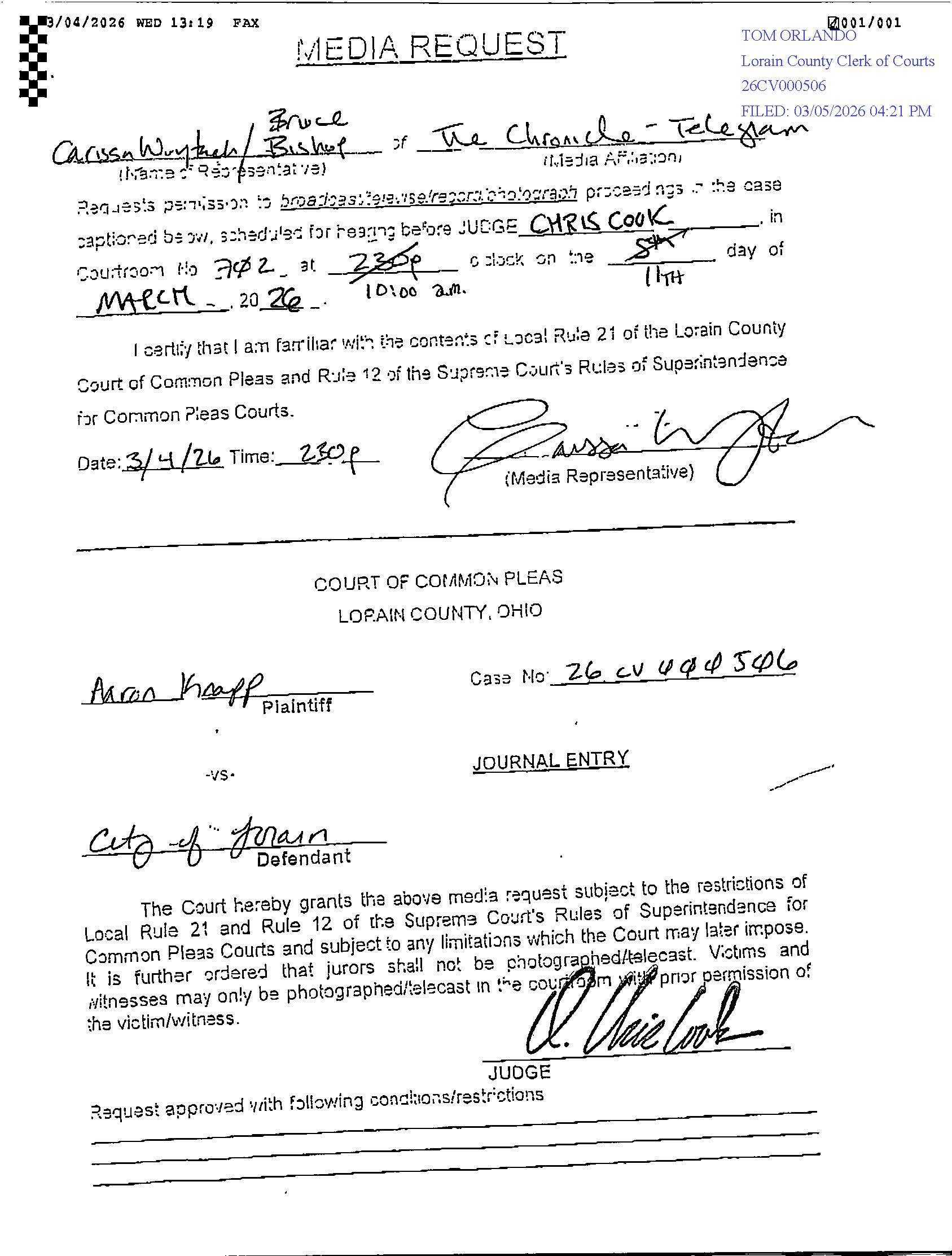
On March 5, 2026, the Lorain County Court of Common Pleas granted a formal media request submitted by the Chronicle-Telegram seeking permission to photograph and cover a hearing in the case Aaron Knapp v. City of Lorain, Case No. 26-CV-000506. The request was filed with the Clerk of Courts and approved through a signed journal entry entered on the court’s docket. The approval did not grant the newspaper unlimited access to photograph anything that occurred in the courtroom. Instead, like most courtroom media approvals, the court attached explicit restrictions governing what the media could and could not do once cameras were allowed inside the courtroom.
Those restrictions were not vague. They were conditions placed on the access the newspaper specifically requested. The court made clear that the approval was subject to the Rules of Superintendence for the Courts of Ohio and Local Rule 21 of the Lorain County Court of Common Pleas, which regulate the presence of cameras in court proceedings. The order then included a direct instruction concerning courtroom photography. Jurors were not to be photographed under any circumstances, and victims or witnesses could only be photographed with their prior permission.
That language matters because it establishes that the presence of cameras in the courtroom did not automatically authorize photographing everyone who appeared in the proceeding. The court placed the decision directly in the hands of the individuals participating in the case. A witness who did not consent to being photographed was not supposed to appear in photographs taken during the hearing. The rule established by the court was simple. Permission had to come first.
A Simple Rule With a Simple Meaning
The requirement of prior permission is not complicated. Courts use that phrase because it has a specific and commonly understood meaning. It requires a photographer to obtain consent from the individual before the photograph is taken. The rule is designed to prevent exactly the situation that occurs when a camera captures someone who has already made it clear they do not want to be photographed.
The court’s order did not say witnesses could object afterward if they discovered a photograph had been taken. It did not say witnesses could be photographed unless they protested loudly enough. It said that photography could only occur with prior permission from the witness. That language places the burden on the photographer and the media outlet seeking access to the courtroom.
When the court grants a newspaper the privilege of photographing a hearing, the newspaper assumes responsibility for following the restrictions imposed by the judge. The permission to bring cameras into the courtroom exists only because the court allows it. Once the court attaches conditions to that permission, those conditions define the limits of what is permitted.
The Photographer Was Told No
Before the hearing began, the Chronicle-Telegram photographer present in the courtroom was informed directly that permission to photograph was not granted. The refusal was communicated clearly and unambiguously before testimony began. There was no misunderstanding about the request, and there was no ambiguity about the answer.
Under the terms of the court’s order, that refusal should have ended the matter. The court’s directive required permission in advance. Without that permission, the photograph was not authorized by the conditions the court established when it approved media coverage of the hearing.
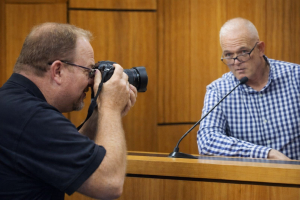
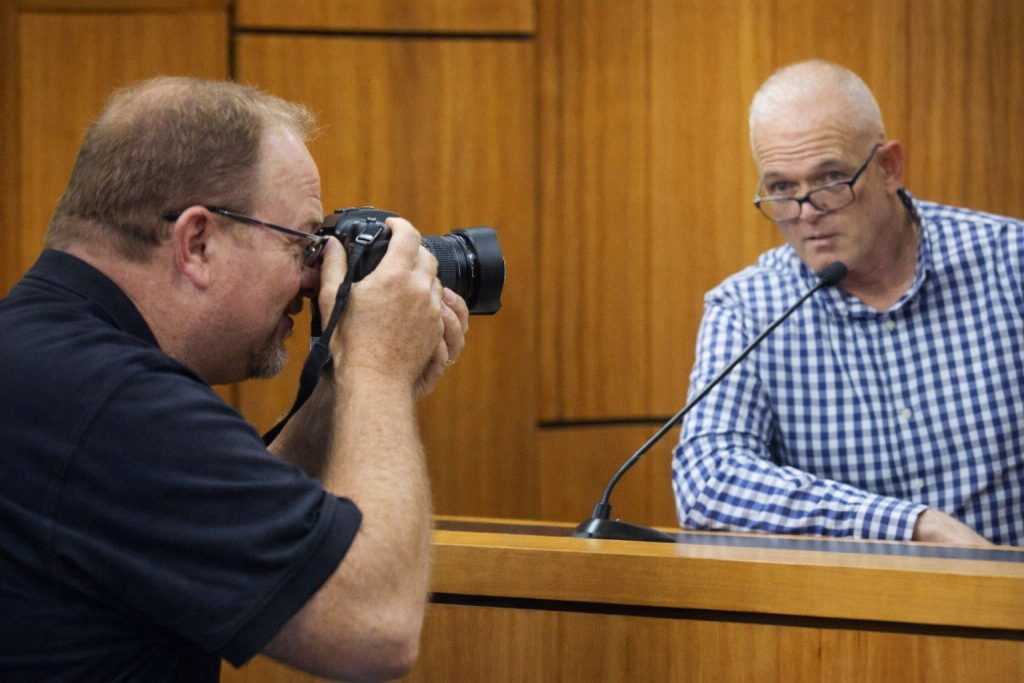
Despite that refusal, readers of the Chronicle-Telegram later saw a courtroom photograph published alongside coverage of the hearing. The image appeared prominently as part of the newspaper’s reporting on the case and immediately became part of the public narrative surrounding the proceeding. The appearance of that image raises a straightforward question that deserves a clear answer.
If the court required prior permission for photographs of witnesses, and that permission was denied beforehand, how was the photograph taken and published anyway?
The Caption Leaves No Doubt About When the Photo Was Taken
The photograph published by the Chronicle-Telegram was accompanied by a caption that reads:
“Lorain resident, Aaron Knapp testifying before Magistrate Barbara Aquilla Butler. Knapp was in court fighting a temporary restraining order banning him from Lorain city property.”
The caption itself confirms two critical facts. First, it establishes that the photograph was taken inside the courtroom while testimony was occurring before Magistrate Barbara Aquilla Butler. Second, it confirms that the photograph depicts a witness actively testifying during the hearing.
That detail places the photograph directly within the scope of the court’s media order regulating witness photography. The court’s restriction applied precisely to that situation. Witnesses could only be photographed if they granted permission beforehand.
The caption also contains a second problem that further undermines the accuracy of the newspaper’s reporting. The Chronicle-Telegram states that Knapp was “fighting a temporary restraining order banning him from Lorain city property.” That description is incorrect. The temporary restraining order before the court was not something filed against Knapp. It was filed by Knapp.
The motion sought emergency relief from the court to address a directive issued by the City of Lorain that barred him from municipal property. In other words, the hearing involved a resident asking the court to intervene, not defending against a restraining order filed by someone else.
When the caption both misidentifies the nature of the proceeding and confirms that the photograph was taken during testimony, it raises serious questions about both the accuracy of the reporting and compliance with the court’s media order.
Courtroom Cameras Are a Privilege, Not a Right
Courtrooms in Ohio are generally open to the public. Anyone may attend a hearing unless the court closes the proceedings for a legally recognized reason. That openness reflects the longstanding principle that the judicial system operates in public view. Members of the press and members of the community can watch what happens in court because transparency is essential to public trust.
Photography inside a courtroom operates under a different set of rules. Cameras are not automatically allowed simply because the hearing is open to the public. Instead, judges decide whether cameras will be permitted and under what conditions they may operate. That authority comes from the Rules of Superintendence for the Courts of Ohio, which give trial judges full discretion to regulate recording and photography during judicial proceedings.
When the press asks the court for permission to photograph a hearing, it is asking for something the court has the authority to deny. If the judge grants that permission, the media outlet must follow the limitations attached to the order. Those limitations exist to protect the fairness of the proceedings and the privacy of the individuals participating in them.
Why Courts Protect Witnesses
Witnesses in court are not always public officials, professional litigants, or individuals who have chosen to place themselves in the public spotlight. In many cases they are private citizens participating in a judicial proceeding because they have been subpoenaed, called to testify, or otherwise required to appear. Courts recognize that the experience of testifying can be stressful and that public exposure can amplify that stress.
Photographs taken during testimony can also have lasting consequences. Images can circulate on social media, be used in future reporting, or become part of online commentary about the case. For individuals who never sought public attention in the first place, that exposure can create risks that extend well beyond the courtroom.
Judges therefore frequently include restrictions in media orders allowing witnesses to decide whether they want to be photographed while participating in a proceeding. The order issued in this case followed that common practice by requiring witnesses to grant permission before any photographs were taken.
The Question That Still Needs an Answer
The broader dispute between a citizen and the City of Lorain will ultimately be resolved through the legal process. Courts will decide whether the city’s actions complied with the law and whether the restrictions imposed on a resident were justified. Those issues will be addressed through evidence, testimony, and judicial decisions.
The issue raised by the courtroom photograph is separate from the underlying dispute but still important. When the press asks the court for permission to photograph a hearing and the judge grants that request subject to clear conditions, those conditions should be respected. The rules that govern courtroom conduct are meant to apply equally to everyone inside the room.
The court’s order in this case required prior permission before a witness could be photographed. If permission was refused beforehand and the photograph was taken anyway, the public deserves an explanation of how that happened. Respect for the rules of the courtroom should not depend on who is holding the camera.
Aaron Christopher Knapp is an investigative journalist and Editor-in-Chief of Knapp Unplugged Media LLC. His reporting focuses on government accountability, public records transparency, and constitutional issues affecting the residents of Lorain County.
About The Author