
The Manual They Didn’t Want You to Read

How a Public Record Turned Into a Moving Target
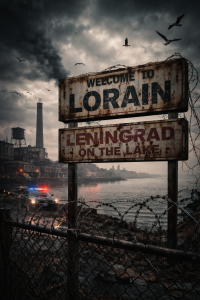
There is a difference between something being public and something being accessible, and if you have ever dealt with the Lorain Police Department, you already understand that difference in practice, not just in theory. The law says records are public. The experience of trying to obtain them tells a very different story. What starts as a simple request quickly becomes a drawn-out process, where access is technically granted but practically withheld through delay, fragmentation, and just enough compliance to avoid saying no.
For months, I asked for one thing. Not commentary. Not summaries. Not selective excerpts. I asked for the policy manual. The actual operational rulebook that governs how officers act, how they are trained, how force is authorized, how the public is treated, and how accountability is supposed to function inside that department. This is not a minor document. This is the framework that defines authority in real-world situations that affect real people.
What I received was not transparency. It was a process that felt designed to exhaust rather than inform. The responses came in pieces. Alphabetically. One section at a time. Each response disconnected from the last. You could not read it as a manual because it was never provided as one. You could not understand the structure because the structure was never given. You had to reconstruct it yourself, one fragment at a time, over weeks and months of follow-ups. That is how access gets buried without ever being formally denied.
And that is the part most people never see. From the outside, it looks like compliance. Internally, it feels like obstruction stretched out over time.
I. The Law Says One Thing, the Process Shows Another
When Public Does Not Mean Accessible
Under Ohio Revised Code 149.43, public offices are required to make records available upon request. The presumption is clear. Records belong to the public unless a specific exemption applies. The burden is not on the citizen to justify access. It is on the government to justify withholding.
But the law does not require convenience. It does not require organization. It does not require that records be provided in a way that makes them understandable as a complete body of work. That gap is where the system breaks down.
Because if you provide a manual one page at a time, scattered and disconnected, you have technically complied with the law while functionally denying the public the ability to understand what they are reading. You have turned access into a puzzle that only the most persistent people will finish.
That is exactly what happened here.
Every response required another clarification. Every clarification required another response. Every response extended the timeline. And the entire time, the record itself remained incomplete in any meaningful sense.
That is not transparency. That is a process that looks like transparency from a distance.
II. The Moment It Was Finally Public
When Access Stopped Being a Fight
Then, without warning, the situation changed. The City published the full policy manual online. Not in fragments. Not in pieces. The entire document was made available in one place, organized, readable, and accessible to anyone who wanted to review it.
The same manual that had been slowly released over months was suddenly complete and easy to access. The barrier disappeared overnight.
There was even a public-facing listing that made it unmistakably clear what was being offered. It did not hide behind vague language. It did not obscure what the link contained. It stated it plainly.
“Lorain Police Department Policy Manual… Click this link to review the policies.”
That line matters more than it might seem at first glance. Because it confirms something that should never have been in dispute. The department itself acknowledged that the manual was appropriate for full public access. It was not sensitive. It was not restricted. It was not exempt. It was something the public was invited to read.
For a brief moment, access actually meant what it is supposed to mean.
You did not need to file a request. You did not need to wait. You did not need to reconstruct anything. You could simply click the link and read the rules that govern the department.
And then, just as quickly as it appeared, it was gone.
III. The Disappearance of Access
When the Link Stops Leading to the Truth
The same pathway that once led directly to the policy manual now leads somewhere else entirely. Instead of the rules, you are redirected to a general City page about the department. It presents information about services, community engagement, and general operations. It tells you what the department says it does.
What it does not show you is how it is required to do it.
The policies are not there. The procedures are not there. The rulebook is not there. The very thing that defines how authority is supposed to be exercised has been removed from that public-facing space.
Nothing about the record itself has changed. The manual still exists. It is still a public record. Its status under the law has not shifted in any way.
What changed is access.
That distinction matters because the law does not operate on visibility. Under Ohio Revised Code 149.43, a record does not become less public because it is harder to find. It does not become optional because it is no longer linked. The obligation to provide access remains the same regardless of whether that access is convenient or buried.
But from a practical standpoint, visibility is everything. If the public cannot easily find the rules, then the rules might as well not exist for most people.
IV. What These Policies Actually Do
The Framework Behind Every Decision
These documents are not abstract. They are not theoretical. They are operational. They define how officers are trained, how situations are handled, when force is justified, and what standards must be followed in every interaction with the public.
They are the difference between a justified action and an unjustified one. They are the benchmark against which conduct is measured. They are the standard that determines whether something was done correctly or improperly.
When those policies are accessible, the public has a reference point. People can read them, understand them, and compare them to what actually happens in real situations. That is how accountability works.
When those policies are fragmented, hidden, or removed from easy access, that reference point disappears. The only version of events that remains is the one provided after the fact. The explanation replaces the standard.
And once that happens, accountability becomes subjective.
V. Why This Archive Exists
Rebuilding Access Without Permission
If access can be changed, removed, or redirected at any time, then it cannot depend on the same system that controls it. That is the reality this situation makes clear.
That is why this page exists.
This is the full collection of policies and procedures obtained through public records requests and prior publication. It is not fragmented. It is not dependent on whether a City link is active or inactive. It is not subject to being quietly replaced with something else.
It is complete. It is organized. It is available.
This is what access looks like when it is not conditional.
VI. The Timeline That Cannot Be Ignored
From Resistance to Access to Removal
At this point, the sequence speaks for itself. The manual was difficult to obtain through formal requests. It was eventually provided in pieces. It was later published in full by the department itself. The public was invited to read it directly. That access point was then removed. The link now leads somewhere else.
That is not interpretation. That is not speculation. That is a documented progression.
And once you lay it out in that order, the question is no longer whether access exists. The question becomes why access changes.
Final Thought
Transparency Should Not Swing Back and Forth
There is something about this pattern that deserves to be said plainly. Transparency is not supposed to operate like a switch that gets flipped on and off depending on the moment. It is not supposed to expand when convenient and contract when it is not. It is not supposed to appear fully one day and then disappear behind a different page the next.
What has happened here does not look like a consistent approach to public access. It looks unstable. It looks inconsistent. It looks like transparency is treated differently depending on timing, pressure, or attention.
At some point, you have to call that what it is. The approach to transparency in this situation has been erratic in a way that raises more questions than it answers. One moment the public is told to read the policies. The next moment the path to those same policies no longer exists.
That kind of back-and-forth does not build trust. It does the opposite. It creates confusion about what is actually available and when.
Transparency should not behave like that. It should not have phases. It should not have moods. It should not feel different depending on the day.
The policies did not change. The law did not change. The public’s right to access did not change.
Only the City’s willingness to make those policies easy to find changed.
So I made sure they stayed found.
All rights reserved © Unplugged with Knapp Media LLC
About The Author