

LORAIN CITY SCHOOLS

THE SYSTEM AFTER NOTICE – PART ONE
WHEN ADMINISTRATIVE LEAVE BECOMES THE RESPONSE, BUT NOT THE RECORD
By Aaron Christopher Knapp
Knapp Unplugged Media LLC
INTRODUCTION
THE MOMENT THE DISTRICT IS PUT ON NOTICE
There is a moment in every case where everything changes, and it does not happen in a courtroom, and it does not happen at a public meeting. It happens the instant a complaint is made, an allegation is raised, or an incident is reported. From that moment forward, the institution is no longer operating in theory or policy language. It is operating under notice. And once that notice exists, the law does not ask what is convenient, it does not ask what is politically acceptable, and it does not ask what can be explained later. It requires action, documentation, and accountability. That is the point where systems stop being described and start being tested.
It is easy to write policies about safety. It is easy to describe procedures in manuals, to outline expectations in training, and to present a system as organized and responsive. It is easy to stand in front of a room, send an email, or issue a public statement that assures the community that the system is working as intended. What is difficult, and what matters, is whether that same system functions the same way when it is forced to respond in real time to a real allegation involving real people. The difference between policy and practice is not theoretical. It is measurable. It exists in the record.
This investigation does not begin with what was said publicly. It begins with what was written internally after those moments occurred. It begins with administrative letters, personnel actions, and documented responses that were created when the district was no longer speaking in general terms, but responding to specific incidents. Those records do not rely on messaging. They reflect decisions. They reflect actions. And they show how the system actually operates when it is required to act.
What those records demonstrate is not confusion or inconsistency at the outset. The initial response is structured. It is immediate. It is consistent across multiple cases. When an allegation is raised, particularly one involving safety personnel or a student related incident, the district moves quickly. Employees are placed on paid administrative leave. They are removed from school property. They are prohibited from contact with staff and students. The action is documented, and it is framed as pending the outcome of an investigation. The language is uniform, and the process appears controlled.
At that stage, the system appears to function exactly as the public would expect. There is an allegation. There is a response. There is an investigation that is supposed to follow. The institution has been put on notice, and it has acted. That is the beginning of accountability.
But accountability is not defined by how a process begins. It is defined by how it is carried through to a conclusion and how that conclusion is documented. When the records are reviewed beyond that initial response, a different pattern begins to emerge. The beginning of the process is documented clearly, consistently, and in detail. The end of that process, in many cases, is not. The system acts quickly, but the record does not always show how the matter was resolved, what findings were made, or whether the obligations triggered by that initial notice were fully carried out.
That gap is where this investigation begins.
WHAT THE RECORD ACTUALLY SHOWS
A CONSISTENT AND IMMEDIATE RESPONSE
When an allegation is raised inside a school district, the response is not supposed to be informal, delayed, or discretionary. It is supposed to be structured, documented, and immediate. That is exactly what the records from Lorain City Schools reflect at the outset. The moment the district is put on notice, the system activates in a way that is consistent, controlled, and clearly defined. Employees are placed on paid administrative leave, they are removed from all district property, and they are prohibited from contact with staff and students. The action is formalized in writing and explicitly framed as pending the outcome of an investigation.
This is not interpretation, and it is not based on secondhand accounts. It is contained in the district’s own documents. Administrative leave letters issued across multiple cases use the same language, the same structure, and the same directives. They identify the employee, they state that an allegation has been raised, and they impose immediate restrictions designed to separate the individual from the school environment while the matter is reviewed. The process is not improvised. It is standardized.
The consistency of these documents matters because it shows that the district is not reacting differently from case to case. The tone does not shift depending on the employee. The restrictions do not change depending on the building. The justification remains the same. An allegation has been made, and the employee is being removed pending investigation. That uniformity suggests that the district has an established protocol, and that the protocol is being applied in a consistent manner.
There is no ambiguity in the initial response. The employee is immediately placed on paid leave. They are directed not to report to any district property. They are instructed not to attend school sponsored events. They are prohibited from contacting staff or students, except through designated channels. The letter itself becomes the record of that action, and it marks the point where the district has formally acknowledged that something has occurred that requires investigation.
At this stage, the system appears to function as the public would expect. There is an allegation. There is a documented response. There is an investigation that is identified as the next step. The district has been put on notice, and it has taken action in response to that notice. The process is clear, and it is visible in the record.
That is the beginning of the process..
THE STANDARDIZED PROCESS
REMOVAL, ISOLATION, AND INVESTIGATION
When the administrative leave letters are read side by side, the pattern becomes unmistakable. These are not individualized documents written to reflect the unique facts of each situation. They are structured responses that follow the same framework every time. The language is consistent, the directives are consistent, and the sequence of actions is consistent. What appears in the record is not a series of isolated decisions. It is a standardized process.
The first step in that process is immediate removal. The employee is placed on paid administrative leave effective the same day the district becomes aware of the allegation. There is no delay built into the system, and there is no indication that the district waits for additional information before acting. The trigger is notice itself. Once the district is aware of a potential issue, the employee is removed from their position, and that removal is documented. The use of paid administrative leave preserves the employment relationship while simultaneously separating the individual from the workplace. It is both a protective measure and a procedural step.
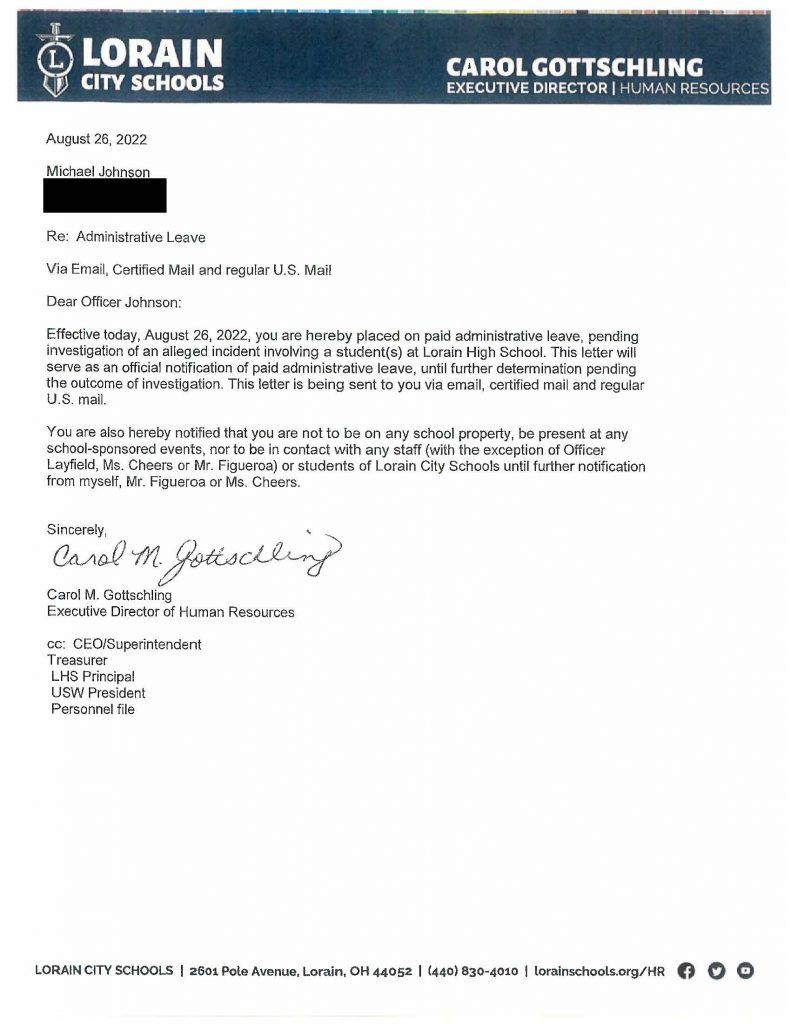
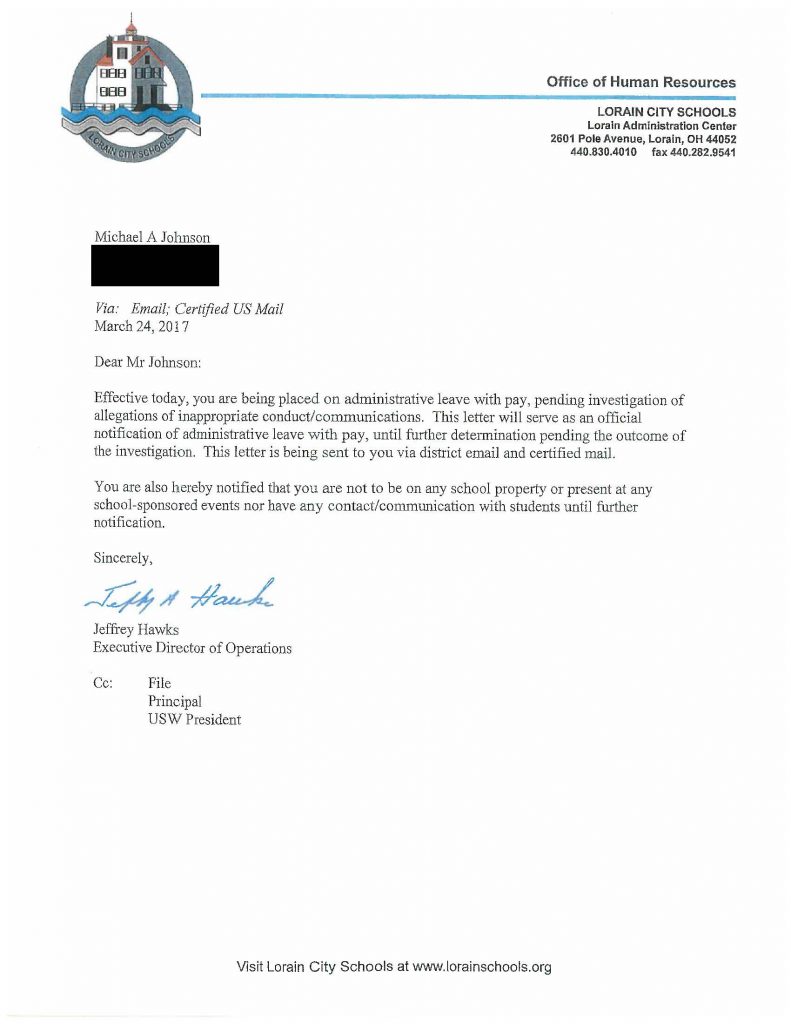
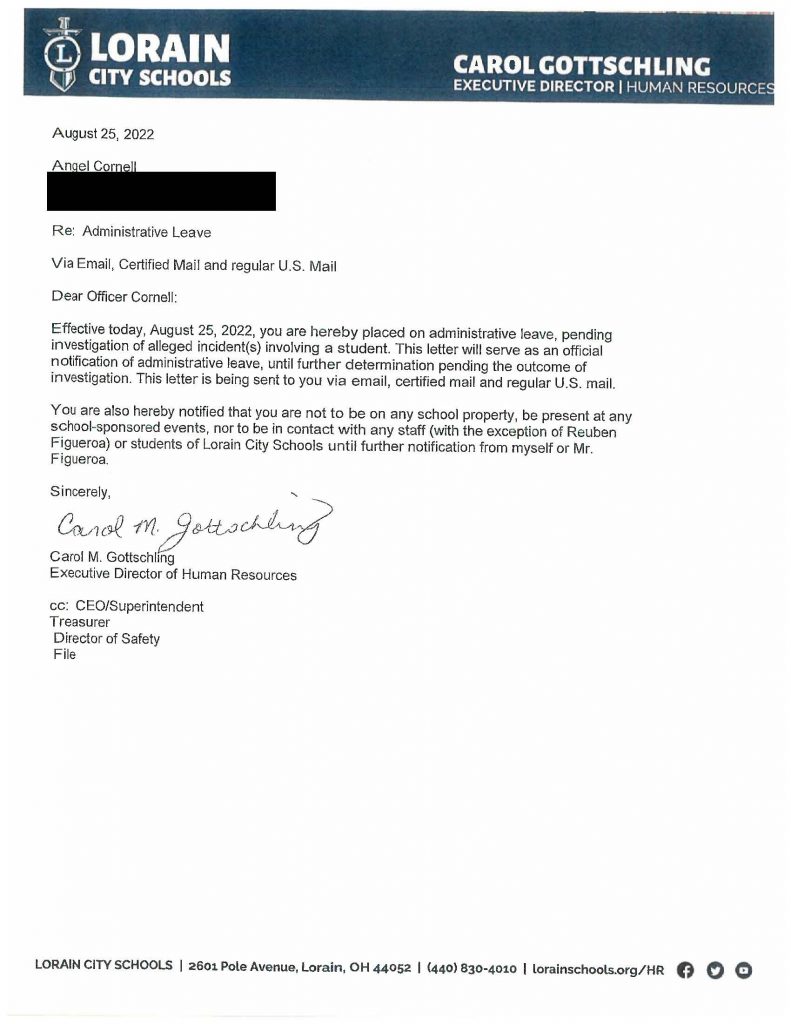
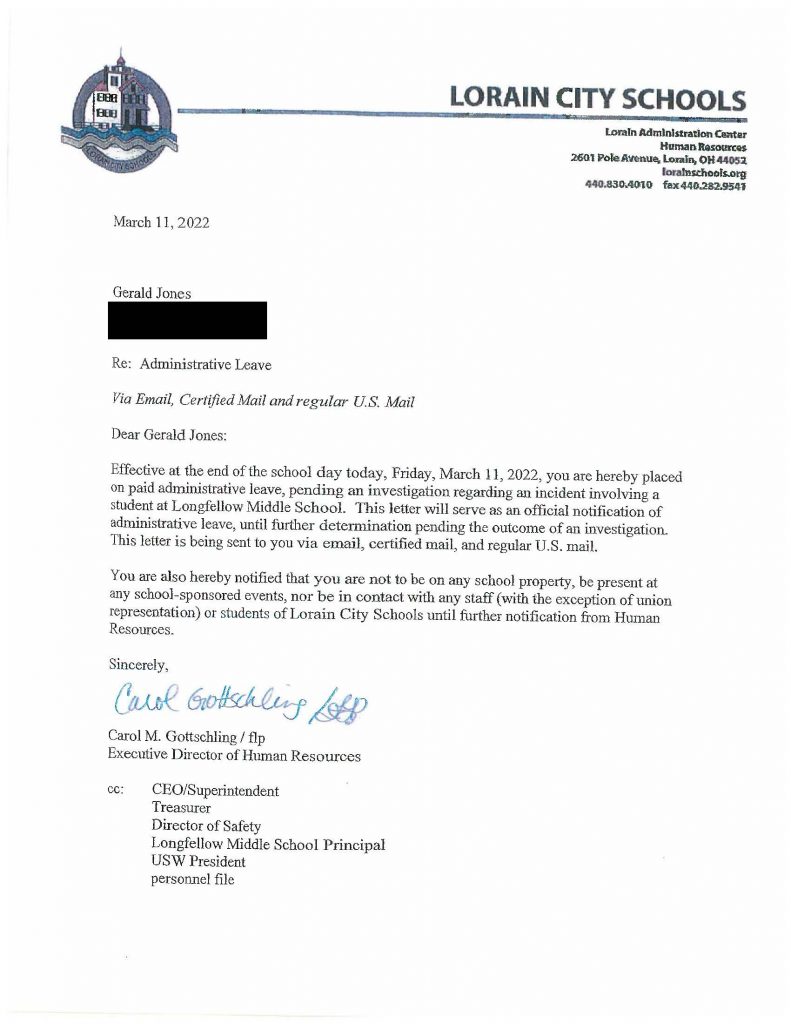
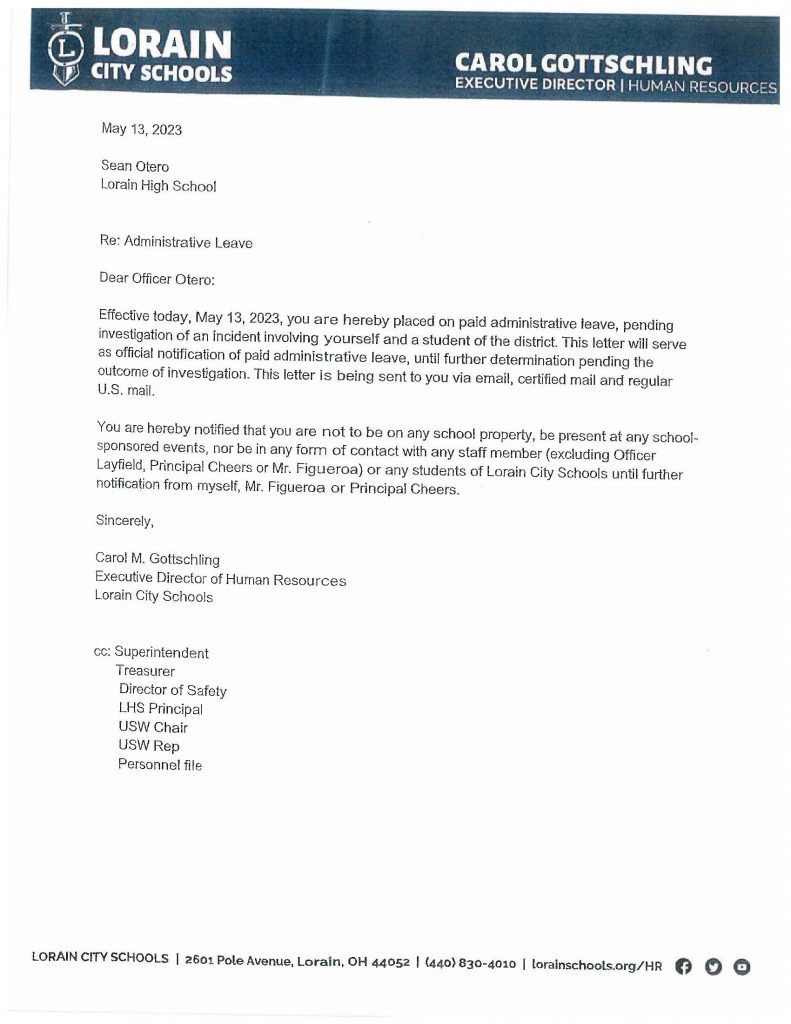
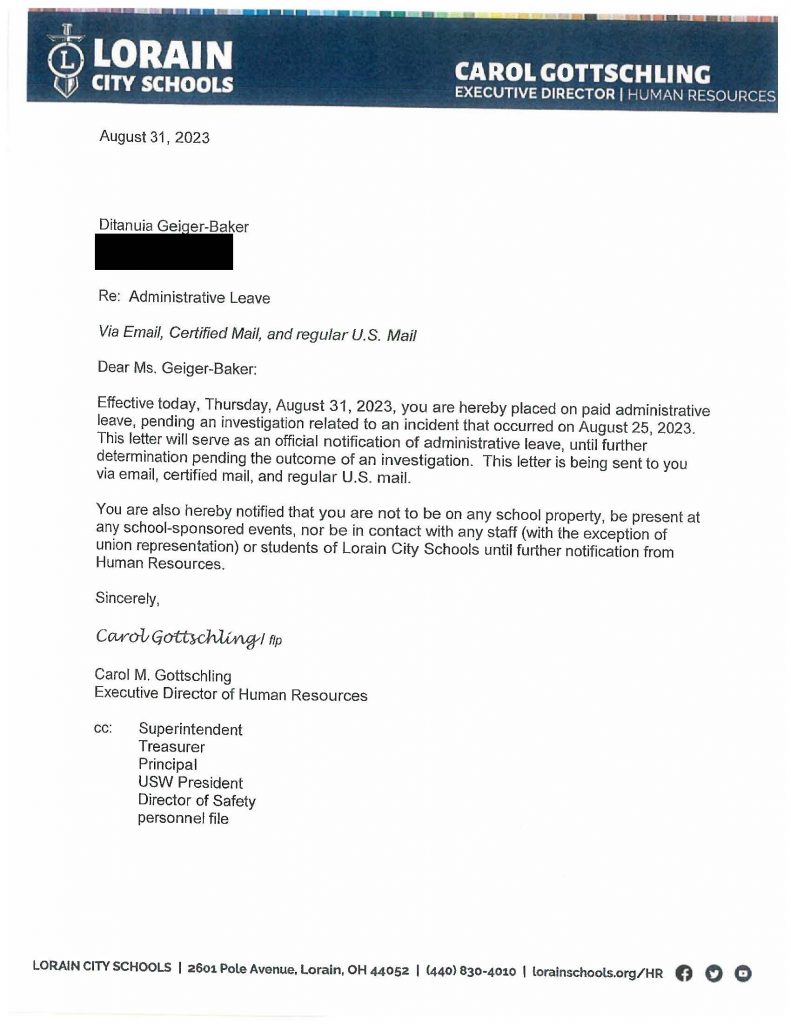
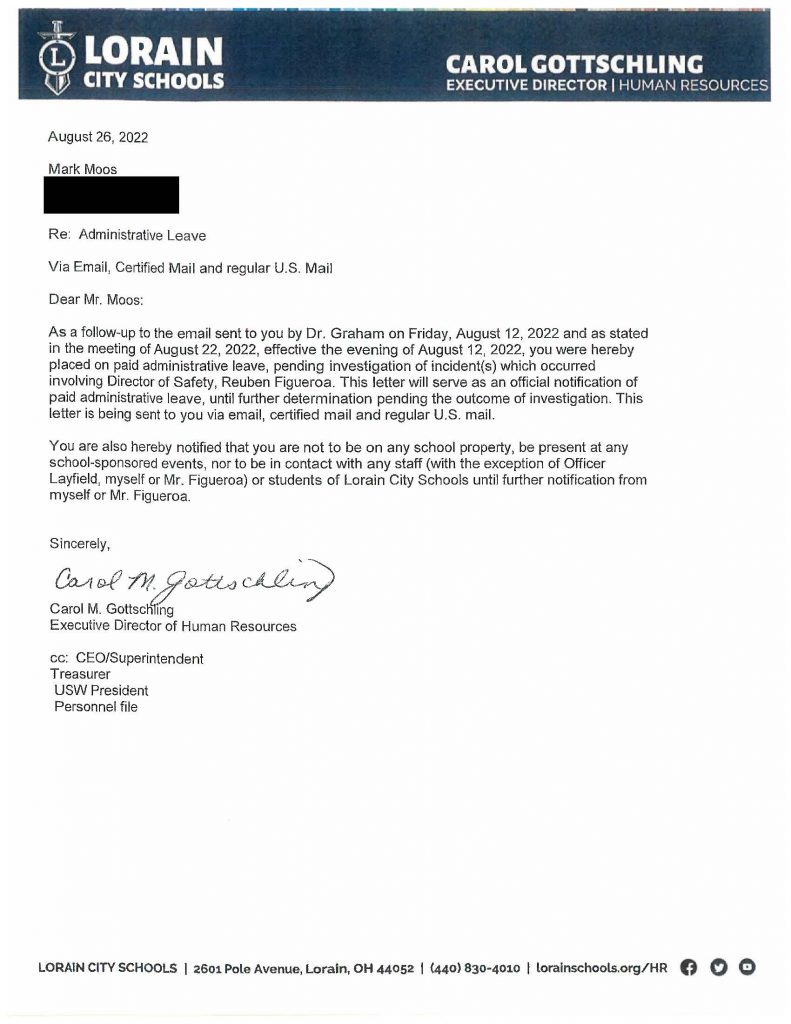
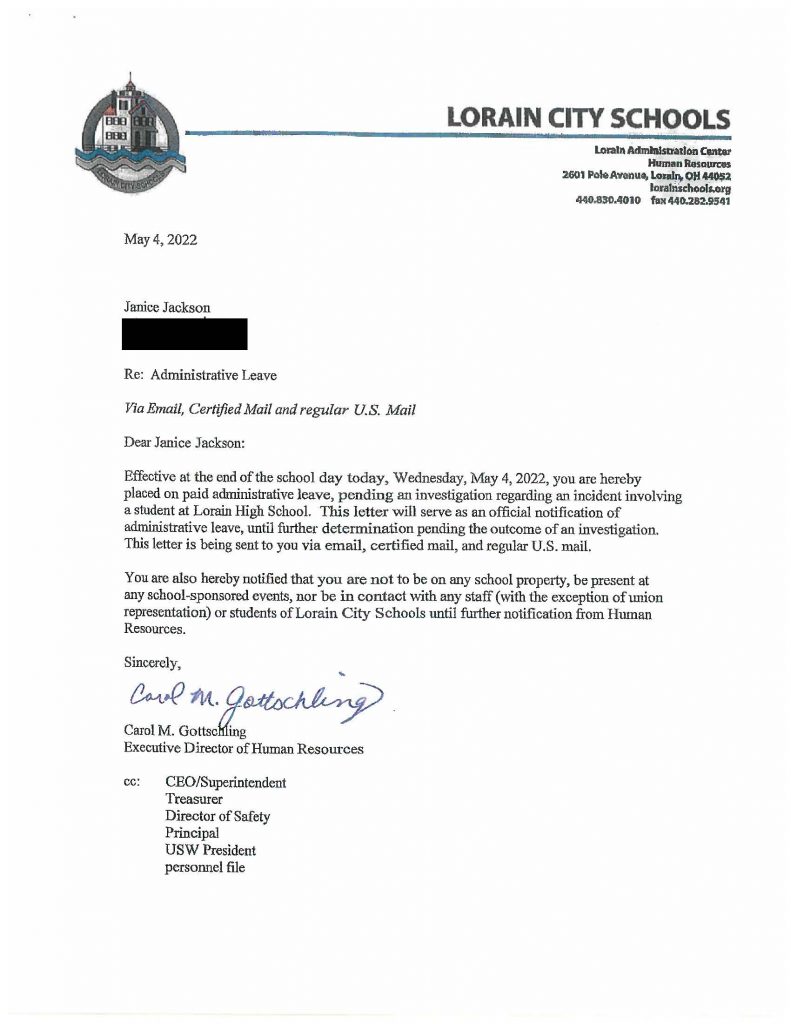
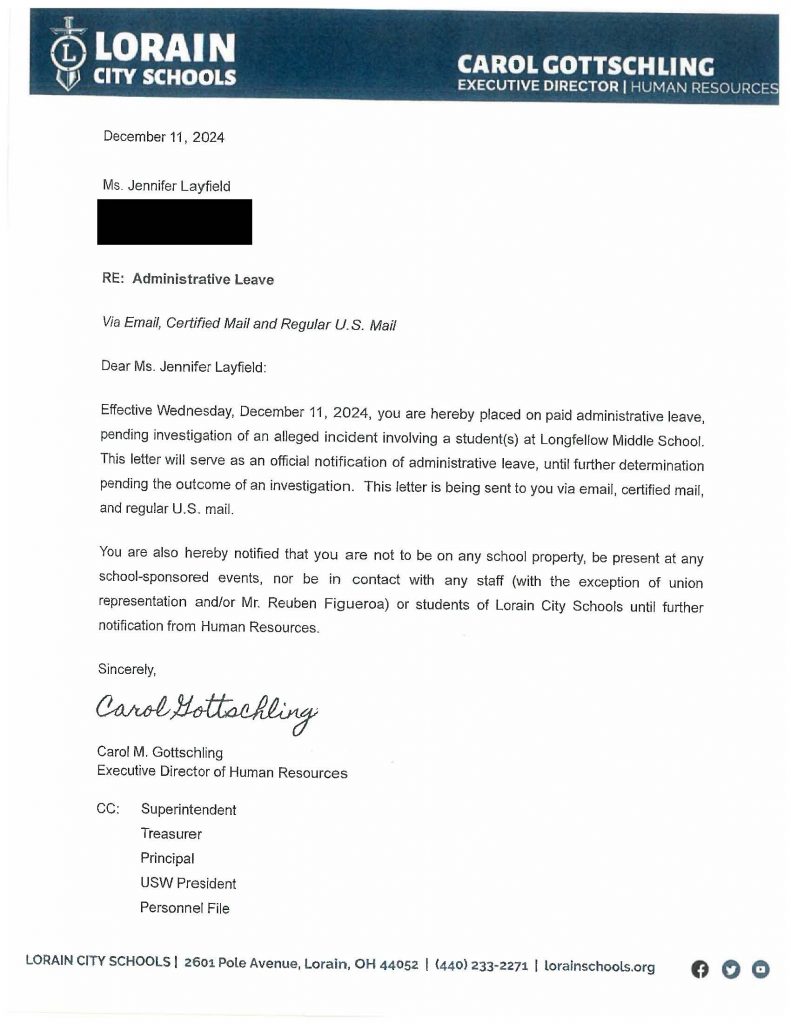
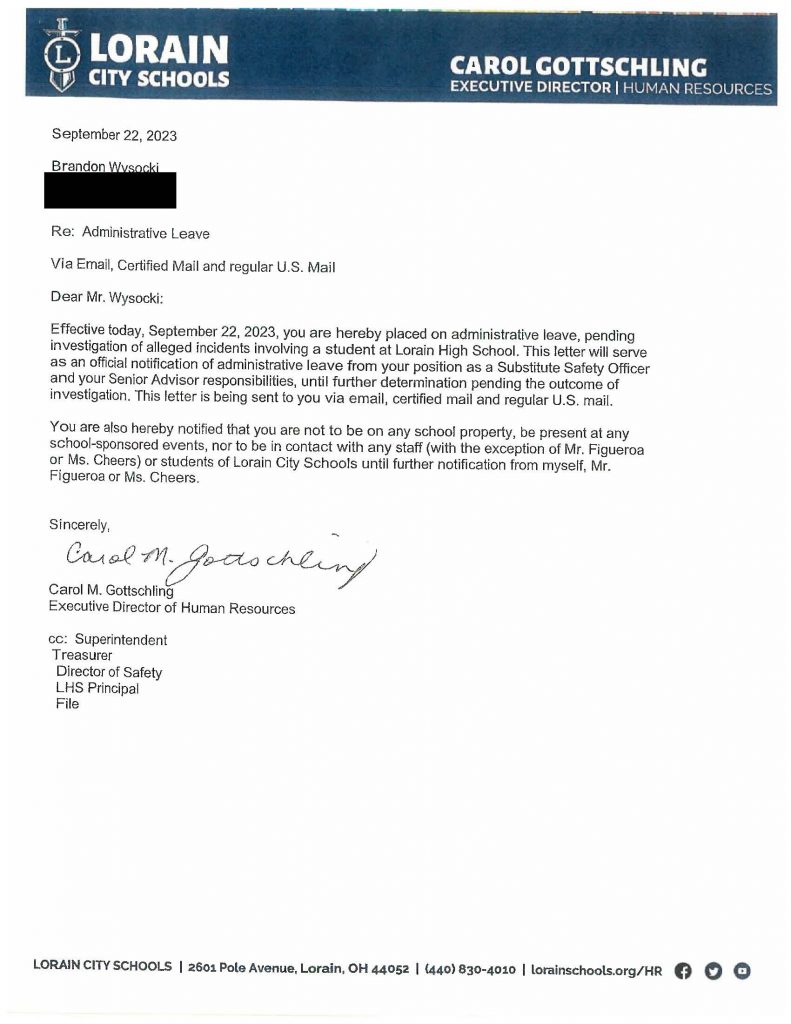
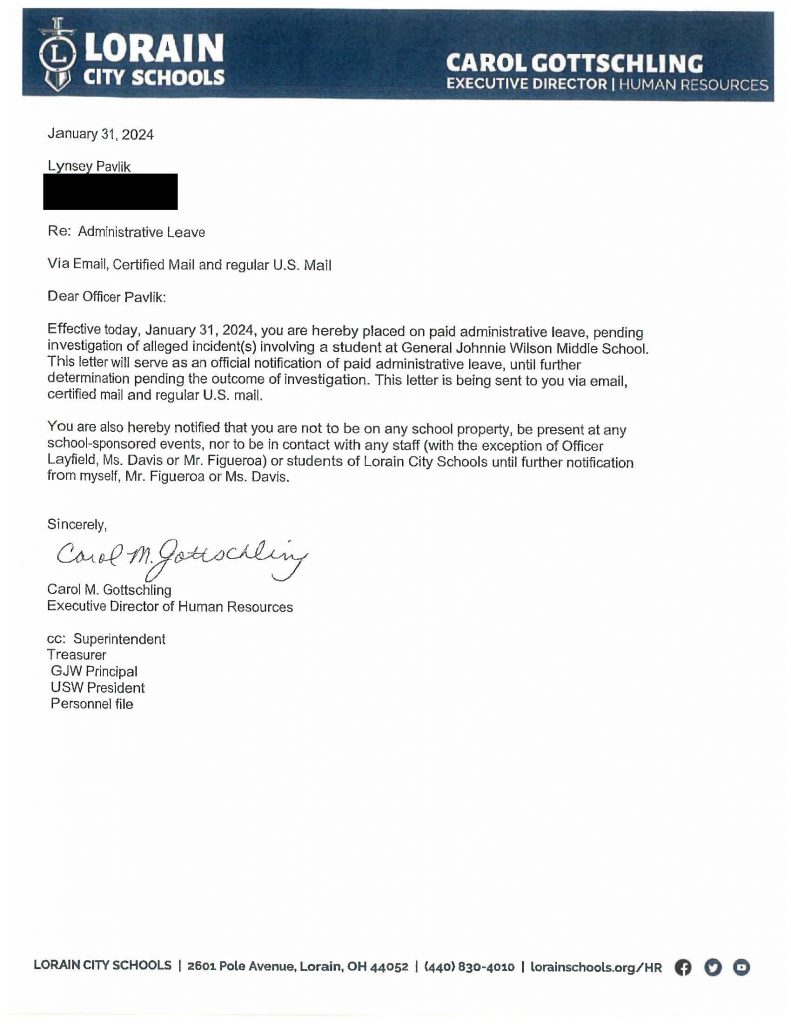
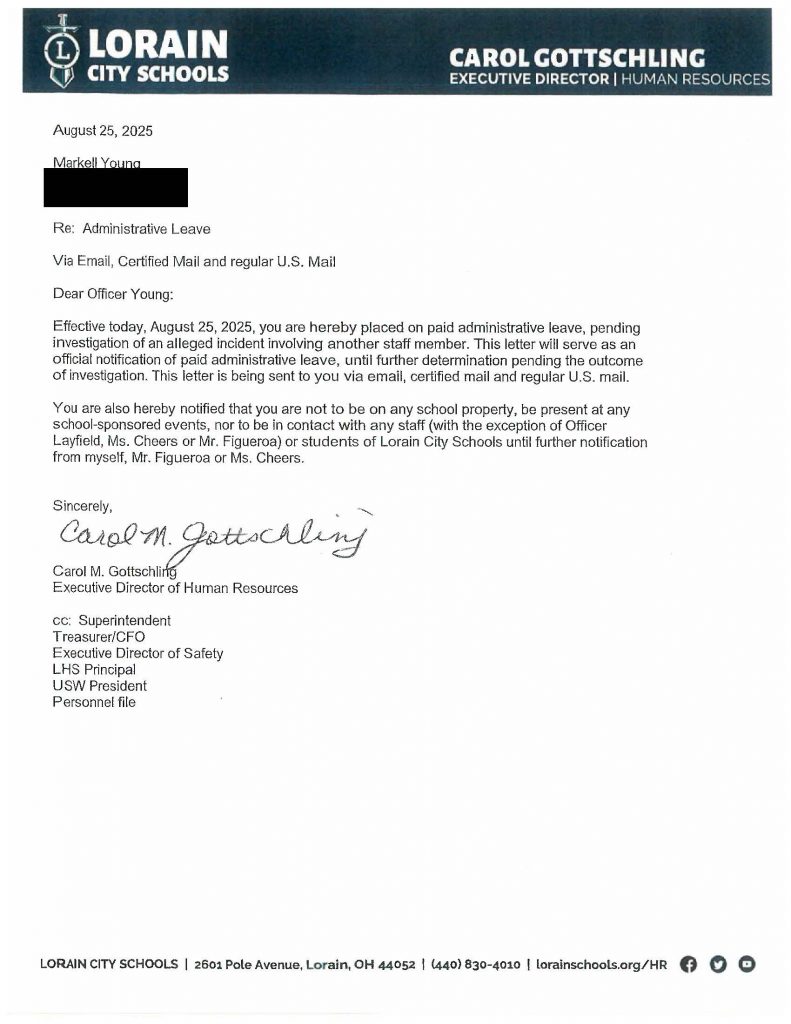
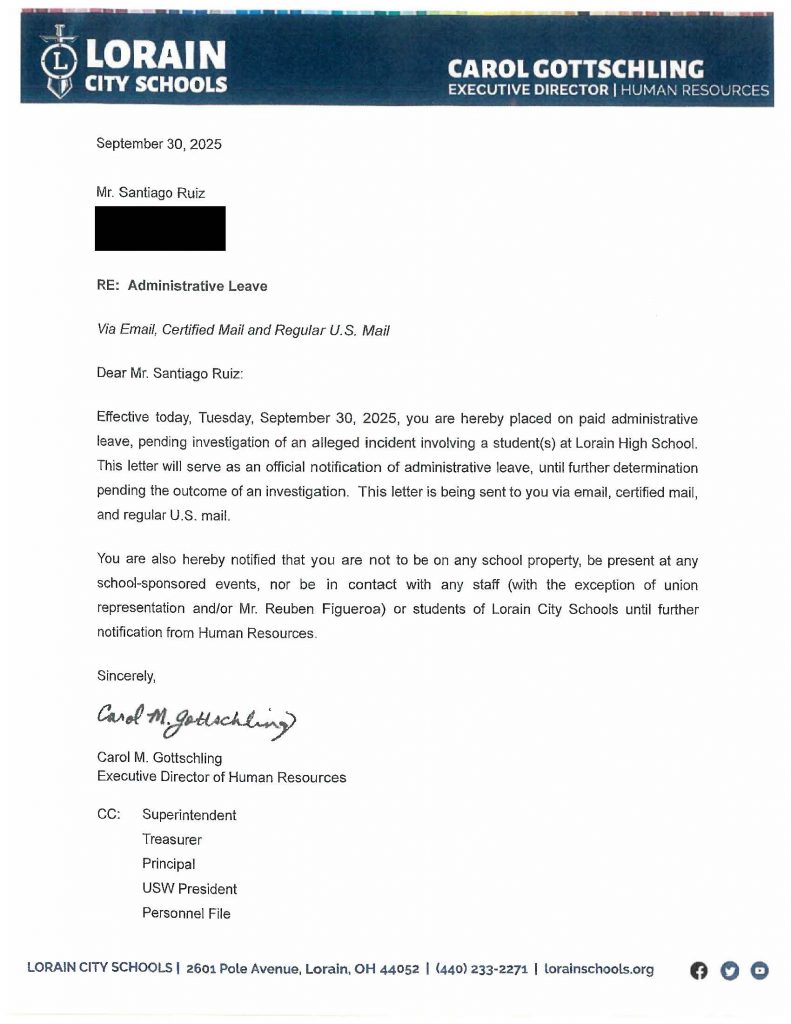
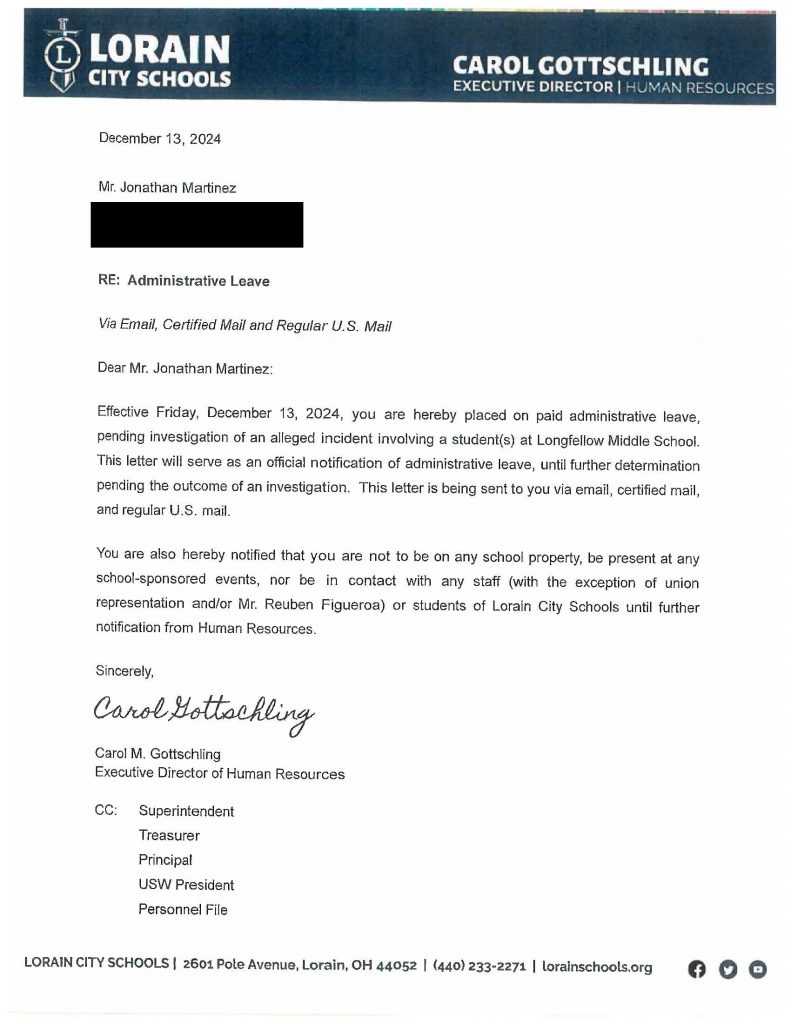
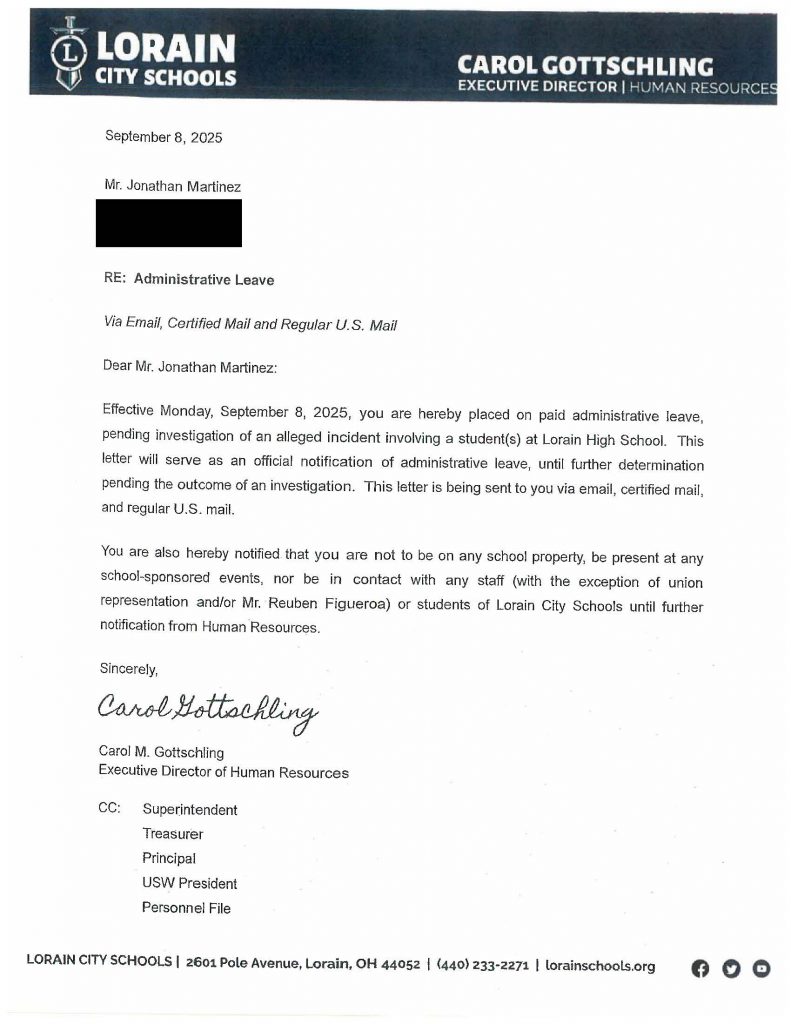
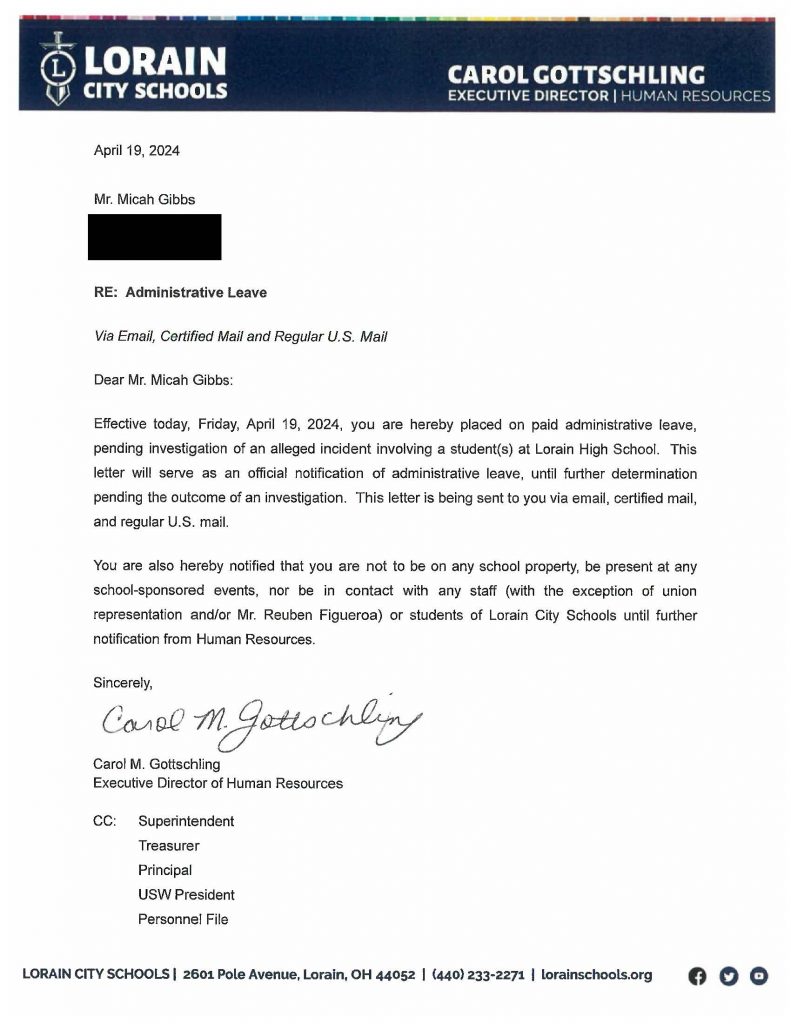
The second element is complete separation from the physical environment of the district. The employee is directed not to report to any district property, and the scope of that restriction is broad. It is not limited to the building where the incident allegedly occurred. It extends to all schools, all administrative offices, and any location connected to district operations. The restriction is comprehensive, and it is designed to eliminate any possibility of contact with the school environment during the investigation. This is not a partial limitation. It is a full removal from the system.
The third element is controlled communication. The employee is prohibited from contacting staff, students, or other individuals connected to the district, except through specific, designated channels. In most cases, those channels are limited to a supervisor, human resources, or union representation. This restriction serves a clear purpose. It prevents the employee from influencing witnesses, accessing information, or engaging in informal communication that could affect the investigation. It also centralizes all communication through official channels, ensuring that any interaction is documented and controlled.
Taken together, these three elements create a system of removal, isolation, and containment. The employee is physically removed from the environment, separated from the people involved, and restricted in how they can communicate. The district has effectively secured the situation at the outset, allowing an investigation to proceed without interference.
Each letter concludes with the same phrase. The action is pending the outcome of an investigation.
That language is not incidental. It defines the entire process. It acknowledges that what has occurred is only the first step. It recognizes that the removal of the employee is not the resolution of the issue. It explicitly states that an investigation will follow, and that the outcome of that investigation will determine what happens next.
The presence of that language carries an expectation. It implies that the process will continue, that a determination will be made, and that the results of that determination will be documented. It signals that the system is designed not only to respond to an allegation, but to reach a conclusion.
And it is that expectation, created by the district’s own words, that makes what follows so important..
THE BREAK IN THE RECORD
WHERE THE DOCUMENTATION STOPS
The administrative leave letters are not informal notices or vague acknowledgments. They are precise, formal documents that establish the moment the district is put on notice and the actions that follow. They are written in definitive language. They identify the employee, they describe that an allegation has been raised, and they impose immediate restrictions. Most importantly, they all contain the same core statement, that the employee is being placed on paid administrative leave “pending the outcome of an investigation.”
That phrase is not incidental. It defines the purpose of the action. It establishes that the removal of the employee is not the conclusion of the matter. It is the beginning of a process that is expected to lead to a determination. It acknowledges that there is a question that must be answered and that the district intends to answer it through an investigation.
At that point, the record is clear and complete. The district has been put on notice. It has acted. It has documented that action. It has identified that an investigation will follow.
It is what comes after that point where the record becomes far less defined.
See Oteros File here: https://acrobat.adobe.com/id/urn:aaid:sc:VA6C2:e61ebe7c-728e-42ae-bc76-23d862710707
When the personnel files are reviewed beyond the administrative leave letters, the continuation of that process is not consistently reflected in the same way. The letters themselves create an expectation that an outcome exists. They state that the leave is “pending the outcome of an investigation,” which necessarily implies that an outcome will be reached and that the outcome will be documented. But in many of the files reviewed, there is no corresponding document that clearly identifies that outcome. There are no attached findings, no investigative summaries, and no formal determinations indicating whether the allegation was substantiated, unsubstantiated, or unresolved.
That absence is not a matter of formatting or organization. It goes to the core of what the process is supposed to accomplish. An investigation is not simply an activity. It is a method for reaching a conclusion. Without a documented conclusion, the record reflects that something was investigated, but it does not reflect what was found.
In some cases, the next entry in the personnel file is not a finding, but a separation. The employee resigns, and the file records that change. The documentation shifts from administrative leave to a personnel action noting that the individual is no longer employed by the district. The employment relationship ends, and the administrative record reflects that fact.
But the transition from administrative leave to resignation does not answer the question that triggered the process in the first place. The letters establish that there was an allegation serious enough to remove the employee from the building and prohibit contact with staff and students. The record of resignation establishes that the individual is no longer employed. What is not consistently present is the documented outcome of the investigation that connects those two points.
The file shows that the employee was placed on leave. The file shows that the employee is no longer with the district. What it does not show, in a consistent and identifiable way, is whether the allegation was confirmed, whether it was disproven, or whether it remained unresolved at the time the employee left.
That gap is not theoretical. It is created by the district’s own language. When a document states that an action is “pending the outcome of an investigation,” it creates an expectation that the outcome exists and that it is part of the record. When that outcome is not visible alongside the action that triggered it, the record is incomplete.
The beginning of the process is documented in detail. The removal is clear. The restrictions are clear. The expectation of an investigation is clear.
The conclusion, in many cases, is not.
And that is where the record stops.
WHY THE OUTCOME MATTERS
ACCOUNTABILITY IS NOT THE SAME AS REMOVAL
The act of removing an employee from a school building is a decisive step, but it is not, by itself, a conclusion. It is a protective measure that addresses the immediate concern. It creates distance between the individual and the environment where the allegation arose. It reduces the risk of continued contact. It stabilizes the situation in the short term.
But removal is not the purpose of the process. It is the beginning of it.
The administrative leave letters make that clear in their own language. They do not state that the matter is resolved. They state that the employee is being placed on leave “pending the outcome of an investigation.” That phrase acknowledges that there is a second phase that must occur, and that the second phase is the one that determines what actually happened. Without that second phase, the first step stands alone, disconnected from any finding or conclusion.
Accountability requires more than immediate action. It requires a determination. It requires that the allegation be examined, that evidence be reviewed, that statements be taken, and that a conclusion be reached based on the information available. That conclusion is not an optional part of the process. It is the point of the process.
Once a determination is made, it must be documented. If an allegation is substantiated, that finding establishes that misconduct occurred and provides the basis for disciplinary action, referral to law enforcement, or other corrective measures. If an allegation is not substantiated, that conclusion is equally important, because it reflects that the evidence did not support the claim and that the employee is not being held responsible for the alleged conduct. If the matter is referred to another agency, whether for criminal investigation or administrative review, that referral is itself a critical part of the record.
Each of these outcomes answers the question that triggered the process. Each provides clarity. Each creates a record that can be evaluated against policy, against law, and against the expectations of the public.
Without that documentation, there is no way to assess whether the system is functioning as intended. There is no way to determine whether similar cases are being handled consistently. There is no way to evaluate whether the investigation was thorough, whether it was timely, or whether the outcome was appropriate under the circumstances. The absence of a recorded outcome removes the ability to review the process itself.
The distinction between removal and accountability is not semantic. Removal addresses the immediate situation. Accountability addresses what actually occurred. One is a temporary measure. The other is a determination that carries consequences, whether those consequences involve discipline, exoneration, or referral.
When the record shows the removal but does not clearly show the determination, the process is incomplete from a public accountability standpoint. The system has acted, but it has not clearly recorded what that action produced.
The absence of a documented outcome does not resolve the allegation.
It leaves it unanswered.
WHEN THE PROCESS ENDS WITHOUT A FINDING
THE OTERO CASE AND THE LIMITS OF INTERNAL ACCOUNTABILITY
There are moments in a record where the gap between removal and accountability is no longer theoretical. It becomes visible in a way that cannot be explained as a paperwork issue or an oversight. It becomes a question of how the system actually resolves serious allegations, particularly when those allegations involve individuals who hold positions of authority over students.
The situation involving Safety Officer S. Otero is one of those moments.
According to the available records and subsequent events, the process began in the same way that the district’s procedures indicate it should begin. An allegation arose, and the system responded. The employee was removed from the school environment. The matter was elevated beyond the district itself, resulting in criminal charges. At that point, the situation had clearly moved beyond an internal personnel issue and into the realm of potential criminal conduct.
That distinction matters.
An internal administrative process is designed to determine whether an employee has violated district policy. A criminal charge reflects a determination by law enforcement that there is probable cause to believe a law has been violated. When both processes are in motion at the same time, the expectation is not that one replaces the other, but that they operate in parallel. One addresses employment. The other addresses criminal liability.
In this case, the criminal process did not remain static. The original charge was reduced to a lesser offense. That is a matter of public record, and it reflects a change in how the conduct was ultimately categorized within the criminal system. Whether that reduction was based on evidentiary considerations, negotiations, or prosecutorial discretion is a separate question. The fact remains that the nature of the charge changed, and the case did not proceed at the level it initially began.
At the same time, the employment relationship did not end with a documented finding of wrongdoing within the personnel file. Instead, it ended with a resignation.
That sequence is significant.
The administrative leave letters used by the district establish that an employee is removed “pending the outcome of an investigation.” That language creates an expectation that the investigation will lead to a determination. In a case where the conduct is serious enough to result in criminal charges, the expectation of a documented outcome is even stronger. There is a clear public interest in understanding how the district evaluated the conduct, what it found, and how it resolved the matter from an employment standpoint.
But when the record reflects removal followed by resignation, without a clearly documented investigative finding, that outcome is not visible in the same way.
The employee is no longer with the district. The immediate issue has been addressed through separation. From an administrative perspective, the situation may appear resolved. The individual is gone, and the district has removed the potential risk from its environment.
But that is not the same as a determination.
The absence of a clearly documented finding leaves unanswered questions about what the district concluded regarding the underlying conduct. It leaves open whether the allegation was substantiated under district policy, whether any internal disciplinary findings were made, or whether the resignation effectively ended the process before those determinations were formally recorded.
The events that followed make those questions more significant, not less.
After the criminal case was reduced, the relationship at the center of the allegations did not disappear. It continued. The former safety officer ultimately married the student involved, and the two now have children together. That outcome is not speculation. It is a matter of fact. It reflects that whatever concerns existed at the time of the allegation, the relationship itself persisted beyond the conclusion of both the employment and criminal processes.
That progression raises a different set of questions.
It raises questions about timing. It raises questions about power dynamics. It raises questions about what safeguards were in place at the time the relationship began, and whether those safeguards were effective. It raises questions about whether the district’s internal process fully addressed the circumstances that gave rise to the allegation in the first place.
Those questions are not answered by the fact that the employee resigned. They are not answered by the reduction of a criminal charge. They are not answered by the passage of time.
They are answered by the findings of an investigation.
And when those findings are not clearly documented in the record, the ability to evaluate the system is limited.
The point is not to draw conclusions that are not supported by the record. The point is to recognize what the record does and does not show. It shows that an allegation arose. It shows that the employee was removed. It shows that criminal charges were filed and later reduced. It shows that the employee resigned. It shows that the relationship continued and ultimately became a marriage with children.
What it does not consistently show, in the same clear and documented way as the initial response, is the district’s own determination of what occurred under its policies.
That distinction is not technical.
It goes to the core of accountability.
Because removal addresses the immediate risk.
A documented finding addresses what actually happened.
And without that finding, the record reflects the beginning of the process, but not its conclusion.
WHAT THE LAW REQUIRES
WHEN A DISTRICT IS ON NOTICE
When a school district becomes aware of conduct that may involve a student, the issue is no longer confined to internal policy or employment discipline. At that point, the law imposes independent obligations that exist outside the district’s administrative process. Those obligations are not optional, and they are not delayed until the district completes its own investigation. They are triggered at the moment there is reason to suspect that a child may be at risk.
Ohio law is explicit on this point. Ohio Revised Code section 2151.421 requires certain professionals, including teachers, school administrators, and other school employees, to immediately report when they know or have reasonable cause to suspect that a child has suffered or faces a threat of abuse or neglect. The statute does not condition that duty on certainty. It does not require a completed internal investigation. It does not require proof beyond a reasonable doubt or even a preponderance of the evidence. It requires suspicion.
The language of the statute is direct. A mandated reporter “shall immediately report” when there is reasonable cause to suspect that a child is at risk. The use of the word “shall” is not discretionary. It imposes a duty. The use of the word “immediately” removes any ambiguity about timing. The obligation arises at the point of suspicion, not at the conclusion of a review.
That structure exists for a reason. The purpose of the reporting requirement is to ensure that allegations involving children are evaluated by agencies that have the authority and expertise to investigate them independently. Schools are not law enforcement agencies. They are not child protection agencies. When a situation raises concerns about abuse or neglect, the law requires that those concerns be referred to the entities responsible for assessing and responding to that risk.
This means that when an allegation involves a student, the district’s responsibility extends beyond placing an employee on administrative leave and initiating an internal review. The district must also determine whether the facts, as they are known at that moment, trigger the mandatory reporting requirement. If they do, the report must be made. That obligation exists regardless of whether the district ultimately substantiates the allegation under its own policies.
The existence of that duty also creates an expectation within the record. If a situation involves potential harm to a child, and if a report is required under Ohio law, there should be some indication that the report was made. That indication may appear in the form of a referral, a communication with child protective services, or documentation reflecting that law enforcement or another agency has been notified. The record does not need to disclose confidential details of an external investigation, but it should reflect that the statutory obligation was recognized and acted upon.
This is where the distinction between internal process and legal obligation becomes critical. An administrative leave letter documents that the district has taken immediate action to remove an employee from the school environment. It does not, by itself, establish that the district has fulfilled its statutory duties under Ohio law. Those duties exist independently, and they must be satisfied based on the facts known at the time the allegation arises.
When the record reflects that an employee was removed “pending the outcome of an investigation,” it confirms that the district initiated its internal process. When the allegation involves a student, the law requires that the district also consider whether a report must be made under Ohio Revised Code section 2151.421. Those are parallel obligations, not alternative ones.
The expectation, therefore, is not simply that the district acts, but that it acts in a way that is consistent with both its internal policies and the legal requirements imposed by the state. The record of that action is what allows the public to evaluate whether those obligations were met.
Because once a district is on notice, the question is no longer whether it will respond.
The question is whether it responded in a way the law requires.
THE QUESTION THAT REMAINS
WHAT HAPPENS AFTER THE LEAVE IS ISSUED
The documents that have been produced so far establish one part of the system with clarity and consistency. When an allegation is raised, the district acts. The response is immediate, formal, and documented. Employees are placed on administrative leave without delay, they are removed from district property, and they are prohibited from contact with staff and students. Each letter reflects the same structure, the same directives, and the same concluding language that the action is being taken “pending the outcome of an investigation.”
At that point, the system appears to function exactly as the public would expect. There is notice. There is action. There is a written record of that action. There is also an explicit acknowledgment that the matter is not resolved, and that an investigation will follow to determine what occurred. The initial phase of the process is visible, structured, and consistent across multiple cases.
But that is only the beginning of the process, not the end of it.
The administrative leave letters do not answer the underlying allegation. They do not make findings, and they do not establish whether misconduct occurred. They exist to create space for an investigation to take place. The language used by the district itself confirms that purpose. When a letter states that an employee is being placed on leave “pending the outcome of an investigation,” it creates a clear expectation that the investigation will produce a result and that the result will define how the matter is resolved.
It is at that point, after the leave has been issued and the investigation has begun, where the record becomes less complete.
When the personnel files are reviewed beyond the initial administrative leave, the outcome of those investigations is not consistently documented in a way that can be readily identified. In some instances, there is no clear investigative report attached to the file. There is no formal determination stating whether the allegation was substantiated, unsubstantiated, or inconclusive. There is no summary of findings that explains what evidence was reviewed, what conclusions were reached, or how those conclusions were applied.
That absence leaves critical questions unanswered. It is not enough to know that an investigation was initiated. The purpose of an investigation is to reach a determination. Without a documented determination, the record reflects that a process began, but it does not reflect what that process produced.
The unanswered questions are not abstract. They are specific, and they go to the core of accountability. There is no consistent documentation showing whether findings were made and, if they were made, what those findings were. There is no clear record indicating whether allegations were substantiated or whether they were determined to be unsupported by the evidence. There is no uniform indication of whether reports were made to outside agencies in cases where the law would require such reporting, particularly in matters involving students. There is no consistent documentation reflecting what disciplinary actions, if any, were taken as a result of the investigation.
In some cases, the next entry in the file is not a finding, but a separation. The employee resigns, and the record reflects that change in employment status. The file shows that the individual is no longer with the district, but it does not consistently show whether the investigation reached a conclusion before that separation occurred, or whether the resignation effectively ended the process without a documented finding.
That distinction matters because the end of employment is not the same as the resolution of an allegation. A resignation removes the individual from the district, but it does not answer the question that triggered the investigation. It does not establish whether misconduct occurred, whether policies were violated, or whether further action was warranted. Those determinations exist, if they exist at all, in the investigative findings that are not consistently present in the record.
The administrative leave letters cannot answer these questions because they were never intended to do so. They document the beginning of the process. The answers exist in the records that should follow, including investigative reports, findings, disciplinary determinations, and any referrals made to outside agencies. Those are the documents that reflect how the district ultimately resolved the matter.
Without those records, the process is only partially visible. The beginning is documented in detail, and the immediate response is clear. What is not consistently visible is the outcome, the determination that defines whether the system functioned as intended.
And that is the question that remains.
WHAT HAS NOW BEEN REQUESTED
SEEKING THE COMPLETE RECORD
The record that has been produced so far shows the beginning of the process with clarity. It shows how the district responds when an allegation is raised. It shows the immediate use of administrative leave, the restrictions imposed on employees, and the formal acknowledgment that an investigation will follow. What it does not consistently show is what happens after that investigation begins, and whether the process reaches a documented conclusion.
That gap in the record is not a matter of interpretation. It is visible in the documents themselves. The letters establish that an outcome exists. The personnel files do not consistently show that outcome in a way that can be identified and evaluated.
In response to that gap, additional public records requests have now been submitted to Lorain City Schools. These requests are not speculative, and they are not open ended. They are tied directly to the structure of the district’s own process. If the system is functioning as described in its own documents, then there are records that should exist to reflect the second half of that process.
The requests seek the documents that correspond to the language used by the district itself. When an employee is placed on leave “pending the outcome of an investigation,” there should be a record that reflects that outcome. The requests therefore seek investigative reports, findings, and determinations associated with administrative leave cases. They seek the records that identify what was reviewed, what conclusions were reached, and how those conclusions were applied.
The requests also seek records that show how long these investigations take and how they are tracked. If administrative leave is used as a standard response, there should be internal records that reflect the duration of those cases, the status of investigations, and the final disposition of each matter. This includes whether employees returned to work, were disciplined, resigned, or were terminated. These are not abstract categories. They are the outcomes that define whether the process is functioning consistently.
In addition to internal findings, the requests seek communications between administrators, human resources, and any external agencies involved in these matters. When an allegation involves a student, the district’s obligations extend beyond internal discipline. Under Ohio law, certain allegations trigger mandatory reporting requirements. If those requirements are met, there should be records reflecting that a report was made or that an external agency was notified. The requests are designed to determine whether those statutory obligations are being recognized and documented in practice.
The scope of the request also reflects a broader issue that has emerged alongside the administrative leave pattern. The district has acknowledged significant financial constraints, including a stated reduction in funding. At the same time, it has invested in communications strategy, messaging, and public engagement. The request therefore seeks records related to the creation and function of the communications role, including how information about budget reductions, personnel actions, and investigations is presented to the public.
This is not an attempt to expand the issue beyond its core. It is an attempt to understand how information is managed, both internally and externally, at a time when the district is making decisions that directly affect students, staff, and the community.
The request itself is structured, specific, and grounded in Ohio law. It is made pursuant to Ohio Revised Code section 149.43, which requires that public records be made available within a reasonable period of time. It identifies specific custodians, specific categories of records, and specific time frames. It limits communications to identifiable terms and subjects. It requests existing records only. It provides for clarification if any portion is deemed overly broad, as required by law.
The request is not asking the district to create new information. It is asking for the records that should already exist if the process described in the district’s own documents is being carried through to completion.
Because the issue is no longer whether the district responds when an allegation is raised.
The record shows that it does.
The issue is whether the district documents what happens next, whether it reaches and records a conclusion, and whether that conclusion reflects compliance with policy and law.
These are not extraordinary requests.
They are requests for the second half of the process
FINAL THOUGHT
A SYSTEM IS DEFINED BY ITS CONCLUSION
A system is not defined by how it begins. It is defined by how it ends.
The first hours after an allegation is raised are important, but they are not the measure of accountability. Immediate action can stabilize a situation. It can separate individuals. It can reduce risk. It can show that the institution is aware of its responsibilities. But none of those actions answer the central question that every investigation is supposed to resolve.
What happened.
The records reviewed so far show that Lorain City Schools has developed a process for that first stage. The response is not ad hoc. It is structured, consistent, and immediate. Administrative leave is imposed without delay. Access is restricted. Contact is limited. Each case is documented in a uniform way, and each letter acknowledges that the matter is not resolved, but is instead “pending the outcome of an investigation.”
That language is not just procedural. It is a promise of what comes next.
Because the purpose of an investigation is not to initiate action. It is to reach a determination. It is to evaluate the facts, apply policy, and arrive at a conclusion that can be documented, reviewed, and understood. That conclusion is what transforms an allegation into a finding, and it is what allows the system itself to be evaluated.
The issue reflected in the current record is not whether the district responds. The record shows that it does. The issue is whether the process that begins with removal consistently leads to a documented outcome, and whether that outcome is preserved in a way that can be identified, reviewed, and assessed.
Without that documentation, the most important part of the process remains incomplete from a public accountability standpoint. The beginning is visible. The action is visible. The expectation of an investigation is visible. What is not consistently visible is the conclusion that the process is designed to produce.
That absence matters because accountability does not exist in the action alone. It exists in the determination that follows. It exists in whether the allegation was substantiated or not. It exists in whether the appropriate steps were taken under policy and under law. It exists in whether the system not only responds, but resolves.
When the subject is student safety, that distinction is not abstract. It is fundamental. The initial response can protect in the moment. The outcome of the investigation determines whether the system has fully addressed what occurred and whether it has taken the steps necessary to prevent it from happening again.
Until the record reflects that outcome, the system can only be evaluated in part.
Because a system is not defined by how it reacts.
It is defined by how it concludes.
CONTEXT AND PRIOR REPORTING
CONTINUING INVESTIGATION
This article is part of an ongoing investigation into Lorain City Schools, its internal processes, and the way the district documents and communicates incidents involving staff and students. This reporting builds on prior documented analysis, public records, and published investigative work examining patterns in enforcement, administrative decision making, and public transparency.
Readers who want to understand the broader context, including prior reporting on district operations, enforcement practices, and financial representations, can review the following published work:
WordPress Reporting
https://aaronknappunplugged.com/
Substack Investigative Series
https://lorainpoliticsunplugged.substack.com/
Key Prior Articles
A Town Hall for the Cameras How Lorain Schools Frame the Narrative
https://lorainpoliticsunplugged.substack.com/p/a-town-hall-for-the-cameras-how-lorains
The Brandon Wysocki Saga Legal Wins and Institutional Resistance
https://lorainpoliticsunplugged.substack.com/p/the-brandon-wysocki-saga-legal-wins
Episode 4 Officer Miguel Baez Betrayal of Trust
https://lorainpoliticsunplugged.substack.com/p/episode-4-officer-miguel-baez-betrayal
Stay Titan Strong But Show the Math
https://lorainpoliticsunplugged.substack.com/p/stay-titan-strong-but-show-the-math
A District Run Like a Family Business
https://lorainpoliticsunplugged.substack.com/p/a-district-run-like-a-family-business
When a Safety Officer Becomes the Risk
https://lorainpoliticsunplugged.substack.com/p/when-a-safety-officer-becomes-the
The Enforcement Model in Lorain City Schools
https://lorainpoliticsunplugged.substack.com/p/the-enforcement-model-in-lorain-city
These articles provide additional context, including prior documentation of personnel issues, enforcement practices, financial decision making, and the broader questions surrounding transparency and accountability within the district.
This investigation will continue as additional records are produced.
LEGAL DISCLAIMER
This article is based on publicly obtained records and is presented for informational and journalistic purposes only. No conclusions are made beyond what is supported by the available documentation. All individuals are presumed innocent unless and until proven otherwise in a court of law.
COPYRIGHT
© 2026 Knapp Unplugged Media LLC. All rights reserved.
About The Author




Magnificent goods from you, man. I have understand your stuff previous
to and you are just too great. I actually like what you’ve acquired here,
really like what you’re saying and the way in which you say it.
You make it entertaining and you still take care of to keep
it wise. I can’t wait to read far more from you.
This is really a tremendous web site.
This design is wicked! You obviously know how to keep a reader amused.
Between your wit and your videos, I was almost
moved to start my own blog (well, almost…HaHa!) Excellent job.
I really enjoyed what you had to say, and more than that, how you presented
it. Too cool!