
The Letter That Was Never Going to Matter
Live at 2100
Live at 2100
The Letter That Was Never Going to Matter
In this episode, I walk listeners through a document that was designed to sound like resolution while avoiding the only question that mattered.
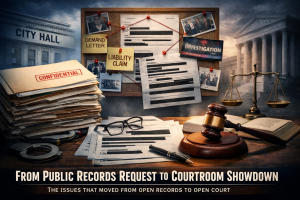
On December 18, 2025, the Lorain Police Department issued a closure letter in response to my complaint against former Chief James McCann. The letter acknowledged my “perception,” expressed institutional pride, and then closed the file with a single conclusory sentence stating that the matter “does not warrant further investigation.” What it did not do was explain what was reviewed, who reviewed it, what records were examined, or how conflicts were addressed when the subject of the complaint was the former chief of police.
This episode explains why that letter was never going to matter, not because of tone or intent, but because of structure. It breaks down how internal administrative closure functions as insulation rather than fact-finding, why “upon review” is not a finding, and how institutions use conclusory language to create the appearance of resolution without exposing the process to scrutiny.
From there, the episode follows what happened next. As the internal door closed, the conflict moved outward. I explain how a long-standing adversarial history with Assistant Prosecuting Attorney Leigh Prugh intersected with an active habeas corpus case, how accusations made in motion practice were never adjudicated, and how those unproven allegations were later repurposed into an Unauthorized Practice of Law complaint filed just seven days after I formally challenged her conduct and requested recusal.
Listeners are taken step by step through what Ohio law actually says about unauthorized practice, why clerical assistance under attorney supervision is not a crime, how habeas “next friend” doctrine was misused after the underlying procedural issue had already been cured, and what the court never found. No perjury finding. No unauthorized practice finding. No disciplinary referral. No judicial determination at all.
This episode also addresses the real-world consequences of turning litigation accusations into licensing threats. I explain what it means to be a licensed social worker facing character attacks that extend beyond a single case, why disciplinary systems must not be used as retaliation tools, and why being reported to multiple boards without adjudicated findings is not an accident but a pattern.
This is not an episode about feelings. It is an episode about process, timing, law, and power. It is about how institutions close ranks, how accusations escalate when criticism cannot be answered on the merits, and how administrative and disciplinary systems can be weaponized when accountability is demanded.
Once you see the timeline laid out honestly, you cannot unsee it.
About The Author