
They Were Warned. They Had Every Opportunity. They Chose This Instead.
How the City of Lorain Ignored Repeated ADA Notice, Controlled the Narrative, and Turned an Ongoing Case Into Public Spectacle at the Expense of a Family
Unplugged | Editorial
ONCE UPON A TIME …. In a Not So Magical Land
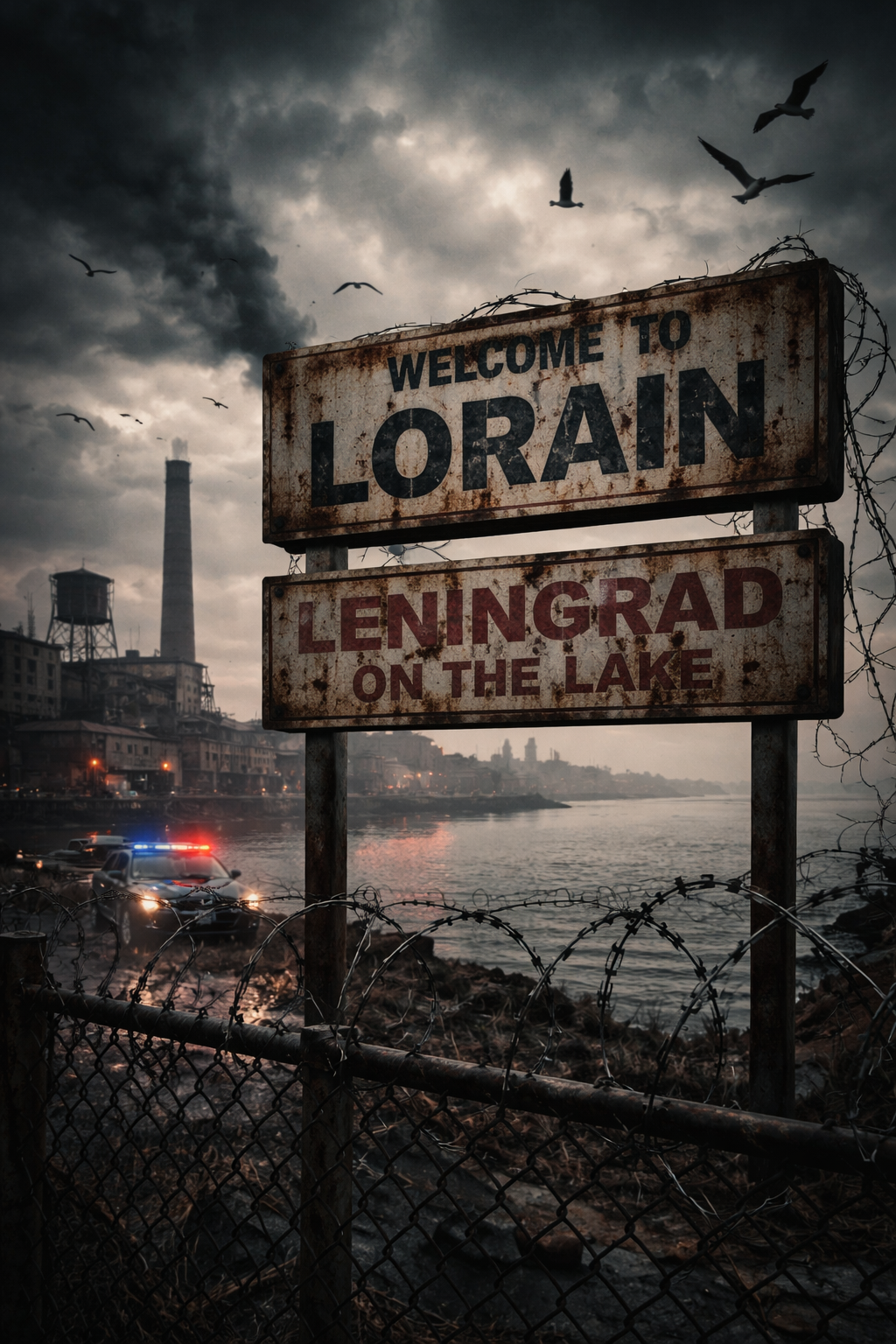
Once upon a time, in a not so magical land affectionately known as Leningrad on the Lake, there lived a government that insisted it served its people, and a citizen who insisted on testing whether that was actually true.
This was not a kingdom of dragons or knights, but it may as well have been, because the rules were written in ways that only seemed to apply when convenient, and power was exercised in ways that often looked less like service and more like control. In this land, titles mattered more than truth, procedure mattered more than people, and those who asked too many questions were rarely welcomed for long.
Our Good Citizen was not particularly powerful, not physically imposing, and not someone who could rely on force or influence to make his point. What he had instead was his voice, his persistence, and a refusal to accept that the rules meant something different depending on who was standing in the room. He believed, perhaps naively at first, that if the law said something, then it should apply equally, whether to a citizen sitting in the audience or to the officials seated at the front and that belief would be tested.
Because in Leningrad on the Lake, the system did not break all at once, and it did not collapse in a single dramatic moment. It revealed itself slowly, through decisions, through responses, and through the quiet realization that when a citizen insists on accountability, the system does not always respond with correction. Sometimes it responds with resistance, and sometimes it responds by trying to make sure that citizen learns a lesson.
This is the story of what happened when Our Good Citizen refused to learn that lesson the way he was expected to.
This Did Not Start With a Video and It Does Not End With One
The people were shown a spectacle. They were handed a clip, a moment, a carefully selected slice of time and told, without being told, that what they were seeing was the story. They were not given what came before it, and they were not given what had been building long before anyone ever pressed play.
What the public is seeing right now is not the beginning of anything. It is the endpoint of a long, documented chain of events that did not happen overnight and did not happen in isolation. Long before any footage ever appeared on Facebook or began circulating through social media, there had already been repeated warnings, repeated objections, repeated legal concerns raised, and repeated opportunities for those in power, the Mayor, the Safety Service Director, the Police Chief, and the system they represent, to address what was happening before it escalated into what it is now. Those opportunities were not ignored once. They were ignored over and over again, across multiple incidents, across multiple communications, and across multiple points where this situation could have been resolved quietly, lawfully, and without public spectacle, if only there had been any interest in doing so.
By the time anyone pressed play on that video, the conflict itself had already been fully formed. There had already been disputes over access to public property, disputes over policy, disputes over how citizens are treated when they attempt to engage with their own government, and disputes over whether those who hold power are required to follow the same rules they enforce on everyone else. Our Good Citizen had already stepped forward, again and again, not with force or threat, but with questions, requests, and a persistence that made it increasingly difficult to ignore him without consequence. There had already been formal notices, documented requests, and direct warnings about the consequences of continuing down this path. None of that is visible in the footage now being shared, and none of it appears in the version of events the public is being asked to accept. The video does not show the cause. It shows a reaction, stripped of everything that would make that reaction make sense.
That is not a minor omission. That is the entire story.
Once a single moment is isolated and released without the context that produced it, it stops functioning as evidence and starts functioning as narrative. A moment becomes a message. A reaction becomes a label. A citizen becomes something easier to dismiss than to understand. It becomes something meant to be consumed quickly, shared quickly, and judged immediately, where speed replaces accuracy and reaction replaces understanding. The public is not asked to examine what led to that moment or to consider the pattern that came before it. They are invited to judge the moment itself, as if it exists on its own and explains itself fully.
And once that kind of narrative takes hold, it is incredibly difficult to undo. The truth becomes secondary to the first impression, and everything that follows is forced to fight against it long after the damage has already been done. What may only represent a fraction of what actually occurred begins to stand in for the whole, especially when the portion that was chosen was not random.
That is why the timing of this release matters. That is why the selection of that specific footage matters. That is why the absence of everything surrounding it matters. What the public is being given is not the full story. It is a version of the story, selected, timed, and released in a way designed to move faster than the truth itself, faster than due process, and faster than any opportunity for Our Good Citizen to speak before being spoken about.
And once that happens, the damage is not just in what people see. It is in what they never get the chance to understand.
THE DECISION TO RELEASE FOOTAGE
This Was Not Transparency and It Was Not Neutral
In the not so magical land of Leningrad on the Lake, the ruling body did not simply act, it chose how its actions would be seen. When the time came, the City made a deliberate decision to release footage almost immediately while this matter remained active, contested, and unresolved, and that decision cannot be dismissed as routine or procedural, no matter how it may later be described. In any system that claims fairness, and in any government that claims to respect process, the standard approach in situations involving pending charges and unresolved facts is restraint, not because it is convenient, but because it is necessary. That restraint exists to protect the integrity of the process, to prevent premature conclusions from forming before the facts are tested, and to ensure that evidence is evaluated where it belongs, inside a courtroom governed by rules, procedure, and accountability, not in a public arena where reaction outruns truth. That safeguard was not followed here.
Instead, the gatekeepers of Leningrad on the Lake chose speed. The footage was released quickly into an environment where accuracy is often secondary to immediacy and where context is the first thing sacrificed. Once that footage entered social media, particularly Facebook, it ceased to function as evidence in any meaningful sense and became something else entirely. It became content, something that could be shared, reacted to, clipped, mocked, and interpreted by individuals who were never provided the full record and were never meant to determine what actually happened. In that moment, the purpose of the footage shifted from documentation to narrative, and that shift did not occur in a vacuum.
In a proper system, evidence is examined in sequence, challenged, compared, and understood within the full scope of surrounding facts. That is how truth is tested and how fairness is preserved. What was released here bypassed that entire process. It was not presented in a way that allows for careful analysis. It was extracted, packaged, and distributed in a form that invites immediate judgment while removing the ability to understand what led to it. The public was not given a continuous record of events, nor were they shown what happened before or after. They were not given the circumstances, the prior interactions, or the conditions that shaped the moment being displayed. What they were given was a segment, taken from a specific point in time, from a specific angle, and presented as if it stands on its own.
In Leningrad on the Lake, that kind of decision carries weight, because a single isolated moment is far easier to control than a complete timeline. It is easier to shape perception when context is removed and easier to guide interpretation when the viewer is not given the information necessary to question what they are seeing. By limiting what is shown, the narrative becomes simpler, more direct, and more likely to spread quickly without resistance. In a system where perception often precedes process, that matters more than it should.
That is exactly what happens when something is released into social media before it is examined through a formal process. The story begins to write itself before any court ever hears it. The audience becomes the judge before any evidence is tested. And Our Good Citizen, whether he speaks or not, is already being defined by what has been chosen for others to see.
This is why the distinction between transparency and presentation is not semantic, it is fundamental. Transparency requires completeness, context, and a willingness to show not only what supports a narrative, but what challenges it and what explains it. It requires trust in the process rather than control over perception. What occurred here does not meet that standard. What occurred here was the release of a controlled portion of events, selected in a way that maximizes impact while minimizing explanation.
Once that version is released, it begins to shape perception immediately. People form conclusions based on what they see, without realizing how much they are not being shown. The gaps are filled in automatically, and by the time additional information surfaces, those initial impressions have already taken hold. That outcome is not surprising. It is predictable. And predictability matters, because when the result is known in advance, the decision to act that way cannot be called neutral.
That is why this was not transparency. It was not neutral. It was not simply the sharing of information in good faith. It was presentation, deliberate, selective, and timed in a way that allowed a narrative to form before the process designed to test that narrative had even begun, and before Our Good Citizen ever had the opportunity to stand in the place where truth is supposed to matter most.
WHO WAS PROTECTED AND WHO WAS EXPOSED
The Imbalance Speaks for Itself
In the not so magical land of Leningrad on the Lake, even the way a story is presented can reveal more than the story itself. The release of this footage tells its own story without requiring speculation. It is visible in what was shown, what was withheld, and how each side of the interaction was presented to the public. When viewed in that light, the imbalance is not subtle. It is immediate, and once recognized, it is difficult to ignore.
Those who served under the authority of the Police Chief were protected from the moment the footage was prepared for release. Their identities were obscured. Their faces were blurred or redacted. Their presence was controlled in a way that limited individual scrutiny and shifted attention away from their conduct. That form of presentation is not incidental. It reflects a decision about how visibility would be distributed, ensuring that those exercising authority were not exposed to the same level of public focus as the person on the other side of the interaction.
Our Good Citizen was not afforded that same protection. He was fully visible, fully identifiable, and placed into a narrative that had already begun to form before he had any meaningful opportunity to respond. There was no effort to present both sides with equal clarity or equal accountability. One side was shielded while the other was fully exposed, creating a predictable effect on how the footage would be interpreted. In an environment where perception often shapes understanding, that distinction carries weight.
That imbalance becomes more significant when the timing of the release is considered. The footage began circulating publicly at a point when the legal process had barely begun, before any meaningful examination of the facts could take place. The portion of events most likely to be misunderstood was made public first, without the surrounding context necessary to evaluate it. In a system that prioritizes fairness, evidence is tested before it is used to shape perception. Here, the sequence appeared reversed.
The contrast with how records are typically handled further sharpens that point. In other instances, requests for footage and records resulted in delay, redaction, or withholding, often justified by reference to ongoing investigations or internal review. The stated position was that release requires time and restraint. In this instance, however, footage portraying Our Good Citizen in a negative light was processed and distributed with unusual speed, reaching both the public and local media within a very short timeframe. That difference in treatment is difficult to reconcile as routine.
When delay is applied in one direction and urgency in another, the result is not consistency. It is selectivity. It raises a straightforward question about why restraint appears when it limits exposure for those in authority, but disappears when exposure shapes a particular narrative. This is not merely an issue of timing. It goes directly to credibility and to whether the information presented to the public is balanced and reliable.
When one side is shielded, the other is exposed, and the release of information aligns with a particular outcome, the result is not neutrality. It is control over perception. And once perception is shaped in that way, the story is no longer something the public uncovers on its own. It becomes something that has already been framed for them before they realize they were only ever shown one side of it.
THE FOOTAGE ITSELF
Why That Specific Clip Was Chosen
In the not so magical land of Leningrad on the Lake, stories are not always told from beginning to end. Sometimes they are told from the middle, carefully trimmed, and presented in a way that ensures the listener reaches a conclusion before ever asking a question. That is exactly what happened here. The footage that was released shows Our Good Citizen in the back of a police vehicle vocalizing, singing, altering lyrics, and using his voice in a way that, without context, appears unusual, disruptive, or even erratic to someone seeing it for the first time. That is the clip that was selected, and that is the version of events that was pushed into the public space. It was not the full interaction. It was not the beginning of what happened that day, and it was not the end of it. It did not include the surrounding events, the prior exchanges, or the conditions that existed at the time. It was a single moment, isolated and presented as if it could stand on its own, as if nothing else existed beyond what the viewer was allowed to see.
That matters because a moment like that, removed from everything around it, is almost guaranteed to be misunderstood. In Leningrad on the Lake, that kind of misunderstanding is not a side effect, it is the result. A moment like that invites reaction before it invites understanding. It is the kind of clip that spreads quickly because it is easy to consume and even easier to judge. People do not need context to react to it, and in fact, the absence of context makes that reaction more immediate and more extreme. The viewer fills in the gaps on their own, assigning meaning to behavior without knowing what produced it, assuming intent without knowing the conditions, and forming conclusions based on something that was never designed to be complete. Our Good Citizen, in that moment, is no longer a person with a history, a pattern, and a set of circumstances. He becomes whatever the viewer decides he is, based on a few seconds of carefully selected footage.
That is not an accident, and it is not incidental to how this was handled. It is a direct result of what was chosen to be released and what was left out. In a place like Leningrad on the Lake, where perception often carries more weight than process, the first image matters more than the full record. When a single, easily misunderstood moment is isolated from a much larger chain of events and presented first, it shapes everything that comes after. It defines how the public interprets not just that moment, but the person within it. It creates an impression that becomes the lens through which all additional information is viewed, even if that information later contradicts the initial assumption. By the time the full story begins to surface, the narrative has already taken hold.
Anyone looking at that footage without context is going to interpret it in a very specific way, not because they are unreasonable, but because they are being given no other framework to work from. They are not seeing what led up to that moment. They are not seeing what had already been said, what had already been challenged, or what conditions were present. They are not seeing the pressure, the environment, or the prior interactions that shaped what they are witnessing. They are seeing a reaction without the cause, and when that happens, the reaction becomes the story. In Leningrad on the Lake, that is often all that is needed.
That is exactly why that clip was effective. It is not because it explains what happened, but because it simplifies it. It reduces a complex situation into something that can be consumed in seconds and judged just as quickly. It removes the burden of understanding and replaces it with the ease of assumption. And once that simplification takes hold, once Our Good Citizen is defined by that single moment, it becomes much harder for the full truth, with all of its detail, all of its context, and all of its inconvenient complexity, to catch up. Because in a place where stories are shaped before they are examined, the first version is often the one that lasts the longest.
WHAT YOU SAW WAS NOT THE WHOLE TRUTH
And Some of It Was Deliberate
In the not so magical land of Leningrad on the Lake, not every truth is hidden, but not every truth is shown. There is something the public has not been given, not because it does not exist, but because it does not fit neatly into a clip or into the version of events that has been circulated. What people saw was not simply a moment of behavior. It was a moment shaped by conditions that were never shown to them, conditions that matter more than the clip itself if the goal is to understand what actually happened.
When a person is placed into a situation where he believes he is being held unlawfully, deprived of sleep, without medication, denied communication, and kept in conditions that are unsanitary and degrading, the response that follows is not going to appear calm or controlled. It is not going to resemble something that can be easily summarized or comfortably viewed. It is going to look raw, and to those who are not shown the surrounding conditions, it may appear easy to dismiss. That does not mean the behavior lacks meaning. It means the meaning has been removed from view.
What the public was shown was not just behavior. It was a reaction to circumstances that were never explained before that footage was released. Our Good Citizen was placed in an environment that was not clean and not stable. There was water leaking from the toilet. The conditions were unsanitary. He was without his prescribed medication, which directly affects how he regulates stress and interaction. He had not slept. He was not given the ability to make a phone call for an extended period of time. Each of those factors directly affects how a person processes stress and responds to their surroundings, and none of them appeared in the footage that was presented.
In that moment, Our Good Citizen made a decision about how he would respond. If he was going to be treated as though he did not have a voice, then his voice would become the only tool he had left to use. When stability, communication, and control are removed, what remains is the ability to speak, and so he used it.
He spoke in a way that was not polite, not measured, and not designed to make anyone comfortable. He said things that were harsh and disruptive, reflecting the conditions he was experiencing and how he understood the situation he was in. To those watching without context, it may have appeared excessive or erratic. But the difference between what appears unreasonable and what is a response to pressure often depends on what information the viewer is given.
That distinction matters, because not all speech is criminal. There is a difference between offensive speech and unlawful conduct. Based on the conduct as described, Our Good Citizen did not threaten harm, did not engage in violence, and did not escalate physically. He used words. Speech that is uncomfortable, critical, or disruptive does not become unlawful simply because it is unpleasant to hear.
What is being lost in how this footage is being presented is that distinction. The public is being shown a reaction and asked to judge it without being given the conditions that produced it. They are seeing the output without the input. They are forming conclusions about behavior without being shown what shaped it. When context is removed, interpretation fills the gap, often incorrectly.
If the public is going to judge what they saw, then they deserve to understand what led to it. They deserve to know the conditions, the context, and the reality that existed beyond the frame of that video. Because what they saw was not just behavior. It was a response.
WHAT THEY DID NOT SHOW
The Conditions That Define the Moment
In the not so magical land of Leningrad on the Lake, what is removed from a story is often more revealing than what is left behind. What was removed from that footage is not incidental, and it is not background detail. It is the very thing that explains what the public is seeing. Without those conditions, the moment appears confusing, exaggerated, or easy to dismiss. With them, it becomes understandable, even if it remains uncomfortable to watch.
At the time that footage was taken, Our Good Citizen was operating on almost no sleep. He had been deprived of rest to a point where cognitive function is affected and emotional regulation is significantly impaired. In that state, perception shifts, reactions intensify, and the ability to process stress is compromised. That alone changes how a person experiences their environment and responds to pressure. On top of that, he was without his prescribed medication, which directly affects how he regulates stress and interaction. That is not a minor omission. It is a critical factor in understanding the moment that was presented.
The physical conditions also matter. Our Good Citizen was held in an environment that was not simply uncomfortable, but degrading. The toilet in the cell leaked water onto the floor, and the space itself was not clean or stable. There were conditions present that contributed directly to stress and instability. This was not a controlled environment. It was one that would affect how any person responded to it. Those conditions are not secondary. They define the environment in which everything else occurred.
Our Good Citizen was also not given the ability to make a phone call for an extended period of time, leaving him isolated, without communication, and without access to support. Under Ohio Revised Code § 2935.20, a person who is arrested or detained is to be provided, forthwith, the ability to communicate with an attorney or another person for the purpose of obtaining counsel. That requirement exists to protect individuals in precisely this kind of situation, where the ability to respond matters most and seemingly that did not occur here.
Our Good Citizen was not permitted to make that call until the following morning, approximately between 8:00 and 9:00 a.m., despite being taken into custody the day before. By that point, he had already spent a significant period of time without access to counsel or communication. The length of that delay can be measured, and it directly shaped the conditions under which everything else occurred.
Taken together, the context is clear. A disabled veteran, without sleep, without medication, held in unsanitary conditions, isolated from communication, and unable to contact counsel. That is the reality that existed behind the moment that was shown. Those are the conditions that shaped the response.
The vocalizing, the singing, and the use of his voice were not random. They were a response to those conditions. They were a way to regulate stress in an environment that was actively increasing it and a way to maintain some level of control when control had otherwise been removed. When stability and communication are taken away, voice becomes one of the few tools that remain. That matters when people are being asked to judge what they saw.
Because any judgment about how Our Good Citizen acted in that cell must be viewed through those conditions. This was not a situation involving violence or physical threat. It was not a scenario where harm was attempted. It was a person, already dealing with documented conditions, placed into an environment that would destabilize anyone. None of that appears in the footage.
The sleep deprivation does not appear. The lack of medication does not appear. The conditions of the cell do not appear. The isolation does not appear. The delay in communication does not appear. What remains is behavior, presented without cause and without context. And that absence matters.
Because including those conditions would require explanation, and explanation slows reaction. It forces people to question what they are seeing instead of accepting it at face value. A clip, by contrast, moves quickly. It allows people to react without understanding and to judge without context. What the public was shown was the result. What they were not shown was everything that caused it.
THIS DID NOT JUST IMPACT ME
The Harm Reached My Child and My Family
In the not so magical land of Leningrad on the Lake, the consequences of a story do not always stop where the story begins. The most serious part of this situation is not how it affected Our Good Citizen. It is how it affected his family, and more specifically, how it reached his child in a way that should never happen under any circumstance. What began as a public narrative about him did not stay contained within social media, did not stay contained within the voices that repeated it, and did not remain confined to whatever this matter is ultimately supposed to be about. It moved beyond that, and it entered a space that is supposed to be protected from exactly this kind of exposure.
The child of Our Good Citizen was impacted almost immediately. The school, a place that should exist apart from public controversy, and a place where those in authority are entrusted with care rather than influence, contacted him the very next day as an emergency contact, even though the child was present, on time, and in no distress. There was no incident at the school. There was no behavioral issue. There was no health concern. There was nothing that would normally justify that kind of contact being made. The only thing that had changed was the narrative that had just been released and circulated throughout Leningrad on the Lake. That is what triggered the contact.
That fact alone should concern anyone paying attention, because at that point this is no longer about transparency, and it is no longer about a legal matter moving through the proper channels. It becomes something else entirely. It becomes a situation where a narrative, once released and allowed to spread unchecked, does not remain confined to the person it targets. It crosses into spaces that should remain untouched, into environments that should be insulated from public influence, and into the lives of those who have no role in the conflict and no ability to shield themselves from it.
In Leningrad on the Lake, that line should never be crossed. When a situation reaches that point, it is no longer reasonable to treat it as isolated or contained. It demonstrates that the impact has extended beyond Our Good Citizen and has begun to affect people who did not choose to be part of this and who have no ability to defend themselves against it. A child should not be pulled into this. A child should not be indirectly affected because of how a situation is being presented publicly. A child should not become collateral to a narrative that was never meant to reach them in the first place. And yet, it did.
As a result, Our Good Citizen is being forced to make a decision that no parent should have to make under these circumstances. He is removing his child from that environment, not because of anything the child did, and not because of any failure on the child’s part, but because that environment can no longer be trusted to remain separate from what is happening publicly. Once that separation breaks down, once the barrier between public narrative and private safety is breached, the risk is no longer theoretical. It is real, immediate, and unacceptable.
That is not an overreaction. That is a parent responding to a situation that has crossed a line that should never have been crossed in the first place, in a place that claims to protect its people but has allowed that protection to fail where it matters most.
THEY WERE WARNED BEFORE ANY OF THIS
This Was Not New Information
In the not so magical land of Leningrad on the Lake, there is a tendency among those in power to behave as though events arrive suddenly, as though conflict appears without warning and without history. But in the case of Our Good Citizen, nothing that has unfolded came without notice, and nothing that occurred can honestly be described as unexpected. Long before any footage was released, long before any narrative was pushed into the public square, and long before this situation escalated into what it has become, the City had already been formally placed on notice of both the circumstances involved and the obligations that followed under the law.
Our Good Citizen did not remain silent, and he did not leave his circumstances to be guessed at or misunderstood. He provided notice directly and in writing. He made clear and documented accommodation requests. He explained, in detail, what he required in order to safely participate in public meetings and to interact within the environment controlled by those who governed Leningrad on the Lake. He identified the conditions that affect him and how stress, confrontation, and certain forms of interaction could impact his behavior. He articulated those realities in a way that removed ambiguity and provided the City with the opportunity to respond, adjust its conduct, and prevent the type of escalation that later occurred.
Those warnings were not vague. They were deliberate, documented, and repeated.
And under federal law, those warnings mattered.
Under Title II of the Americans with Disabilities Act, codified at 42 U.S.C. § 12132 and implemented through 28 C.F.R. Part 35, a public entity is prohibited from discriminating against a qualified individual on the basis of disability in its services, programs, or activities. Once a public entity is on notice of a disability, it is required to make reasonable modifications where necessary to avoid discrimination, unless doing so would fundamentally alter the nature of the service or create a legitimate safety concern. That obligation does not disappear when a person is inconvenient, critical of government, or involved in an enforcement action. It applies across the full scope of public interaction.
That includes law enforcement.
Officers acting on behalf of a public entity are not exempt from these obligations. Courts have recognized that failure to account for known disabilities during police encounters can give rise to liability under Title II. Once notice is given, the obligation attaches and continues through the interaction, whether it occurs in a meeting chamber, on private property, during detention, or within a holding facility.
In Leningrad on the Lake, that obligation was not meaningfully addressed. There was no clear indication of a structured response. There was no documented engagement with the information that had been provided. There was no evidence that reasonable modifications were considered or implemented in light of the notice that had been given. The absence of response, in that context, is not neutral. It reflects a decision not to act. And that decision carries consequences.
When a governing body is placed on notice of a disability, provided with specific information, and given the opportunity to respond, the failure to do so is not a minor procedural issue. It makes the outcome that follows foreseeable. It means that what occurs next is not unexpected, but the product of inaction in the face of known obligations.
That foreseeability extends beyond meetings and into enforcement. Even in the context of police interaction, there are constitutional limits that remain in place. Speech, including criticism of government actors, is protected under the First Amendment. Courts have repeatedly held that verbal criticism, profanity, or offensive language directed at officers, without more, does not by itself constitute criminal conduct. Whether specific conduct meets the elements of an offense depends on the facts, but speech alone does not become unlawful simply because it is uncomfortable or unwelcome. That is the foundation that governs all of this.
And yet, in Leningrad on the Lake, those principles were treated as though they could be set aside. The opportunity to prevent what the public is now seeing did not arise at the moment a video was released. It existed long before that, at a time when the situation could have been addressed lawfully and without escalation. The City had the ability to recognize the circumstances early, to respond appropriately, and to account for what had already been disclosed and documented. It had the opportunity to ensure that interactions would not escalate into something that could later be isolated and presented without context., and importantly, that opportunity was not taken.
Instead, the warnings were disregarded, the requests were not acted upon, and the legal obligations that followed from that notice were left unmet. When that occurs, the outcome is not unpredictable. It is the direct result of failing to act when action was required, and sadly as we know now this was not new information.
It was information that had been provided, documented, repeated, and tied directly to legal obligations that apply to those who govern and those who enforce. And when those obligations are not addressed, what follows is not confusion. It is consequence.
THEY WERE WARNED AGAIN IN CLEAR LEGAL TERMS
And Still Did Nothing
In the not so magical land of Leningrad on the Lake, there comes a point where ignorance can no longer be claimed and misunderstanding can no longer serve as a shield. That point had already been reached long before any footage was released and long before the public was invited to form opinions about Our Good Citizen. By that stage, the City had been provided not only with notice, but with clear, structured explanation of what the law required and how its conduct was being evaluated against those requirements.
After the initial accommodation requests were not acted upon, the matter did not remain informal. It was formally escalated through an ADA Title II Notice of Violation, a document that set out, in specific terms, the obligations imposed by federal law, the ways in which those obligations were alleged not to have been met, and the corrective measures necessary to bring conduct into compliance. This was not a general complaint. It was a legal notice that placed responsibility on the City with clarity.
That notice made one point unmistakable. The obligation to provide reasonable modifications to a qualified individual with a disability does not depend on convenience or agreement. Under Title II of the ADA, those obligations apply whenever a public entity engages with that individual through its services, programs, or activities. They do not pause because a situation becomes adversarial. They do not disappear because authority is being exercised. They continue throughout the interaction. That includes enforcement. That includes detention.
That includes any setting where the authority of the state is being applied.
Placement into custody does not remove those obligations. The duty to avoid discrimination and to make reasonable modifications, where required, continues through the encounter. It applies in a meeting chamber, on the street, during detention, and within a holding facility. The setting may change. The obligation does not.
In Leningrad on the Lake, that framework was explained more than once. Our Good Citizen provided notice over an extended period of time. He raised these issues well in advance, revisited them more than a year before the incident at issue, and raised them again in the months leading up to it. Each time, the same information was provided, and each time the City had the opportunity to engage, respond, and adjust its conduct before the situation escalated.
Those opportunities were not taken, and in failing to take them, the City moved itself into the very position it could have avoided. Each ignored request did not resolve the situation but instead compounded it, narrowing the available paths forward until escalation became the only remaining outcome. By continuing to disregard what had been clearly presented, the situation did not dissipate. It advanced.
The matter was then elevated further. A certified ADA advocate, working in coordination with counsel, contacted the Mayor directly, removing any remaining ambiguity about the seriousness of the issue. That communication did not rely on general concerns or informal requests. It outlined a documented pattern of repeated accommodation requests, identified the City’s response as noncompliant with federal law, and made clear that the obligations at issue were not discretionary. They were ongoing, enforceable, and already in effect.
At that point, the issue was no longer one that could be misunderstood or overlooked. It had been articulated, supported, and delivered at a level that required acknowledgment and response. The failure to act after that point did not preserve the status quo. It ensured that the situation would continue to develop under conditions that had already been explained..
At that point, there was no lack of clarity. The City had been told what the law required. It had been told how its conduct was being evaluated under that law. It had been given another opportunity to act, this time framed in explicit legal terms. No meaningful change followed.
Instead, the response took a different form. Rather than correcting the conduct that had been identified, the City proceeded to release footage that portrayed behavior without the surrounding context that had already been explained. That decision was made after notice had been given, after legal obligations had been outlined, and after the connection between those obligations and the underlying conditions had been made clear.
That context cannot be separated from what followed. This was not a situation where the potential impact of releasing that footage was uncertain or unknowable. The footage emphasized behavior that had already been described, in advance, as connected to stress response, disability, and environmental conditions. Those explanations had been provided. They were documented. The City was not left to infer them or reconstruct them after the fact.
At the same time, it is reasonable to recognize that the Good Citizen was aware he was being recorded. That awareness raises a question that does not resolve itself easily. Why would a person, fully aware that cameras are present, allow a moment reflecting stress and instability to be captured without attempting to conform that behavior to how it might later be perceived. Why would that moment unfold without restraint if the expectation were that it would remain contained.
That sequence raises a more difficult question, not about intent, but about predictability. When a system has been engaged repeatedly, when it has been placed on notice, and when it has responded in consistent ways over time, its reactions become easier to anticipate. Decisions that may appear sudden from the outside begin to follow a recognizable pattern when viewed from within the full history of interaction.
If that is true, then what followed was not unexpected. The escalation, the recording of the moment, and the rapid release of that footage were all actions that align with a pattern that had already been established. The speed of that release did not occur in isolation. It occurred in a context where prior conduct suggested how the system responds when challenged.
And that is what gives the moment its significance. While the response may have been predictable, predictability does not confer legitimacy. A course of conduct does not become lawful, appropriate, or justified simply because it follows a pattern. The fact that a reaction can be anticipated does not transform it into something permissible under the law, nor does it shield it from scrutiny as potential retaliation. If anything, predictability strengthens the concern, because it suggests not an isolated decision, but a repeated approach taken with awareness of its consequences. The issue, then, is not whether what occurred could have been expected, but whether it was lawful, appropriate, and consistent with the obligations that had already been clearly established.
Because when a response is predictable, it does not need to be orchestrated to be foreseeable. It only needs to be understood. And when it is understood, the consequences that follow are no longer surprising, even if they are still consequential. That question matters, because it highlights a tension between perception and context. A moment like that, viewed in isolation, invites judgment. Viewed with context, it demands explanation. And in a system where prior notice has already been given regarding the conditions that produce that behavior, the recording of that moment does not exist in a vacuum. It exists within a framework that had already been explained.
And yet, the footage was released into the public domain before any formal process had the opportunity to evaluate the full record. It was released in a form that invited immediate interpretation without context, and at a point when the legal process had not yet unfolded. The result was not simply the sharing of information, but the shaping of perception at a stage where the underlying facts had not yet been tested.
That is not consistent with neutrality or restraint. It reflects a decision about how the situation would be presented before it would be examined. What is also notable is what did not occur in other situations. In comparable instances involving other individuals, footage was not immediately released into the public sphere, identities were not placed into a narrative at the outset, and the most vulnerable moments were not isolated and distributed before the legal process had time to proceed.
That difference in treatment is difficult to explain as routine. When restraint appears in one instance but not another, when delay is applied selectively, and when exposure aligns with a particular outcome, the pattern becomes apparent. At that point, the issue is no longer one of procedure alone. It is one of choice.
And when repeated legal warnings are followed not by compliance but by escalation, not by correction but by exposure, and not by restraint but by presentation, the question is no longer limited to what happened in a single moment. It becomes about why those choices were made and what they reveal about how the situation was handled.
THE GOOD CITIZEN BECOMES THE STORY
When the Messenger Is Rewritten as the Problem
Once upon a time, in a not so magical land called Leningrad on the Lake, there was a Good Citizen who was never meant to be the headline. The Good Citizen was the one asking why the headlines did not exist where they should have, why certain stories faded while others were amplified, and why the rules seemed to apply differently depending on who was being questioned. The Good Citizen filed requests, raised objections, pointed to the law, and insisted that those in power follow the same standards they enforced on everyone else. That was the role. That was the function. That was the purpose. But somewhere along the way, that purpose was inverted.
The one asking the questions became the subject of them, not because the Good Citizen changed, but because the narrative around the Good Citizen changed. What began as questions about compliance, obligations, and conduct shifted into something easier to manage. The focus moved away from what was being said and onto how it was being said. Substance was replaced with commentary about tone, personality, and demeanor. The issues themselves faded, and in their place came a simplified narrative where the Good Citizen was no longer the one asking questions, but the reason those questions did not need to be answered.
That shift is not grounded in law. There is no statute that conditions rights on politeness. There is no rule that limits constitutional protections to speech that is comfortable to hear. There is no legal standard that permits public officials to disregard obligations because the person raising them is direct, persistent, or unwilling to soften their position. The law does not measure tone. It measures conduct. It does not reward presentation. It requires compliance.
And yet, tone became the substitute for truth. The conversation moved away from whether the law was followed and toward whether the Good Citizen was likable. It moved away from whether obligations were met and toward whether the Good Citizen was too direct in pointing out that they were not. That shift matters because it redistributes responsibility. It takes the burden off those who are required to act and places it onto the one insisting that they do. Why must the Good Citizen carry that burden.
Why must the Good Citizen be the one to file requests, track timelines, cite statutes, and follow every procedural step, while also being expected to remain measured in the face of delay, denial, or escalation. Why is the expectation that the Good Citizen must operate at a higher standard than the institutions that are legally obligated to serve the public. Why is it that the Good Citizen must remain patient while those in authority are permitted to ignore, deflect, or escalate without immediate consequence.
Because in this not so magical land, the expectations are not equal. The Good Citizen is expected to follow every rule. The Good Citizen is expected to remain composed. But when the Good Citizen insists that those same rules apply to those in power, the response is not always compliance. Sometimes it is deflection. Sometimes it is silence. And sometimes it is something more consequential.
It is turning the Good Citizen into the story. That transformation is effective because it changes the frame. Once the Good Citizen is labeled difficult, the underlying questions become easier to ignore. Once the Good Citizen is framed as disruptive, the disruption becomes the focus instead of what caused it. Once the Good Citizen becomes a character, the narrative no longer needs to be examined. It only needs to be followed. In that shift, the original questions and the issues that required attention begin to disappear, not because they were resolved, but because they were replaced.
At that point, the commentary changes. The focus turns to whether the Good Citizen was too direct, too persistent, or handled things the wrong way. But none of that alters what the law requires. There is no exception for discomfort. There is no provision that excuses noncompliance because the issue was raised forcefully. The obligations existed before the Good Citizen spoke, and they remain regardless of how the Good Citizen is perceived.
And still, the expectation remains that the Good Citizen must carry the entire burden. The Good Citizen must raise the issue, document it, and prove it, while maintaining composure throughout. If that standard is not met, the failure of others is treated as justified. That is not accountability. It is inversion. It is a system where the person without power is expected to be exacting, while the people with power are excused when they are not.
THE NUMBERS THEY DO NOT WANT TO TALK ABOUT
Step back from the narrative and look at the pattern itself, because patterns do not rely on opinion, and they do not change based on how a story is framed.
In a small local publication, coverage is limited. Space is limited. Editorial choices are deliberate. Repetition is not accidental. A private citizen appearing once is normal. Appearing twice may stand out. Appearing repeatedly, across different events, across different months, and across multiple phases of interaction with government and law enforcement, is not incidental. It is a pattern.
Eighteen mentions. That number exists within a system where most individuals never appear at all, where some appear once and disappear, and where very few appear often enough to become recognizable to the public. Eighteen mentions, many of them placed prominently, is not how ordinary people are covered. It is not how routine misdemeanor cases are typically handled, and it is not how a private citizen moves through a local media cycle under normal circumstances.
Most people appear once, perhaps twice, and then they are gone. They do not return as a continuing subject. They do not become a familiar name. They do not become a thread that is picked up again and again. But the Good Citizen did not disappear.
The Good Citizen returned, repeatedly, across different contexts, across different stages, and across different interactions with the same institutions that were being questioned. Over time, repetition itself became part of the narrative. And repetition is not neutral. It builds recognition. It builds familiarity. It ensures that each new mention carries the weight of the last.
It is easy to deflect this by pointing to sports teams, to say that the Cleveland Cavaliers or the Cleveland Browns appear more often. Of course they do. They are designed to be covered. They generate daily content. Their repetition is expected and built into the structure of reporting. But that is not the relevant comparison.
The relevant comparison is to other private citizens, to other individuals charged with misdemeanors, and to others interacting with local government under similar circumstances. When that comparison is made honestly, the difference becomes difficult to ignore. Those individuals do not appear eighteen times. They do not become recurring subjects. They do not become ongoing narratives. They appear, they are processed, and they disappear. Our Good Citizen did not disappear.
Instead, he returned repeatedly, across multiple moments and multiple contexts, until the repetition itself became part of the story. And once that pattern is recognized, the question is no longer whether the Good Citizen was covered.
The question becomes why? Why this individual?
Why this frequency, why this continuity, in a place where there is no shortage of serious stories, no shortage of cases involving real harm, and no shortage of events that demand attention, that question does not resolve itself. Because stories are not chosen at random. They are chosen on purpose.
WHAT THEY DID AFTER THAT DEFINES THIS ENTIRE SITUATION
Because Now There Is No Ambiguity
In that not so magical land known as Leningrad on the Lake, the story had already progressed beyond the point where confusion or lack of information could reasonably be claimed. The Good Citizen had already spoken, documented, warned, and explained, repeatedly and in detail, what the conditions were, what the law required, and what would follow if those obligations continued to be ignored. Those warnings were not vague or informal. They were precise, deliberate, and delivered in a way that gave those in authority the opportunity to respond. They did not.
What followed was not hesitation or reassessment. It was escalation, and immediately after that escalation came the decision to release the footage into the public domain. That sequence matters, because it defines how the situation must be understood.
At that point, the available explanations narrow. The conditions had been described. The obligations had been outlined. The potential consequences had been identified. The information was not incomplete, and the situation was not unclear. Those responsible for decision making had been given the opportunity to act differently. The decision that followed was not to correct the conduct, but to publish the result.
The footage that was released reflected behavior tied to conditions that had already been disclosed and explained. It showed a response shaped by stress, deprivation, and environment, factors that had been communicated well in advance. The connection between those conditions and that behavior was not unknown. It did not require reconstruction after the fact. And the footage was released.
That is not consistent with oversight or simple misjudgment. It reflects a decision made with awareness of how the footage would be received once placed into the public domain, and made at a time when the legal process had not yet had the opportunity to evaluate the full record. At that point, the story changes.
Because when a public authority is warned, provided with multiple opportunities to respond, and informed of its obligations, the issue is no longer limited to whether something went wrong. It becomes a question of why those opportunities were not taken and why a different course was chosen.
Once that question exists, the events that came before it take on new significance. What might appear isolated when viewed individually begins to form a pattern when viewed in sequence. Each decision, considered on its own, may be explained. Taken together, they reflect a progression away from response and toward control over how the situation is presented. That is why the ambiguity disappears.
This was not a single decision made without context. It was a series of decisions made with increasing information, each one narrowing the range of reasonable explanations. They were aware. And they acted.
THE QUESTION THAT REMAINS
Why None of the Opportunities Were Taken
In that same not so magical land called Leningrad on the Lake, the part of the story that does not go away is not what happened at the end, but what was ignored along the way. This was never a situation that unfolded too quickly to be understood or too suddenly to be addressed. It developed over time, with repeated points where the outcome could have been different if different choices had been made. The path that led here was visible at every stage, and it offered multiple opportunities to prevent everything that followed.
The first of those moments came when the Good Citizen made the initial request for accommodation. That was not a demand or a confrontation. It was an opportunity. It provided clear information about what was needed, why it was needed, and how a response could prevent conflict before it began. That moment carried a straightforward path forward, acknowledgment, engagement, and adjustment. Had that occurred, the situation may not have progressed further. It did not.
The next opportunity arose when interactions began to shift and tension became visible. Even then, the situation had not reached a point of no return. There was still time to step back, recognize the developing pattern, and respond in a way that prevented escalation. There was still time to apply the information that had already been provided and to address the situation before it expanded. That moment required awareness and restraint.
It was not taken. The matter then moved from informal communication to formal notice. At that stage, the expectations were no longer open to interpretation. The obligations were outlined, the concerns were identified, and the law was clearly presented. This was a structured opportunity to comply with federal requirements and correct course before the consequences became more significant. That moment carried legal weight.
It was still not taken. Even after that, when the issue was elevated directly to leadership, another opportunity remained. By that point, the pattern had been established, the history had been explained, and the risks of continuing on the same path had been made clear. There was no ambiguity about what was happening or what was required. At that level, action would not have required further investigation. It would have required a decision.
That decision was not made. At every stage, the Good Citizen presented an opportunity for resolution. At every stage, there was a chance to comply with the law, to deescalate the situation, and to prevent harm, both to the individual involved and to the integrity of the system itself. Each of those moments stood on its own as a point where the outcome could have been different.
Each one passed. And that is what defines everything that followed. Because when a situation reaches this point after repeated, clearly defined opportunities for resolution have been ignored, the outcome cannot be described as something that simply happened. It becomes something that was permitted to continue, shaped not by a lack of options, but by a consistent failure to choose any of them. That is the question that remains. Not what happened at the end, but why none of the chances to prevent it were taken.
FINAL THOUGHT
This Was Not an Accident
In that not so magical land called Leningrad on the Lake, the ending of this story does not read like a mistake or a series of disconnected events that happened to collide at the wrong time. It reads as a long developing conflict that reached its conclusion after years of warning, documentation, and ignored obligations. The Good Citizen did not appear overnight, and neither did the response. Both were shaped over time through repeated interactions that were never resolved, only escalated.
The issue is not confined to a single moment, a single charge, or a single video. It is what this entire sequence reveals about the use of authority when a citizen refuses to stop asking questions, refuses to accept incomplete answers, and refuses to step aside when confronted. The Good Citizen did not change the rules. He insisted that the rules be followed.
None of what occurred came without warning. The conditions were explained. The needs were documented. The legal obligations were outlined clearly, repeatedly, and over an extended period of time. At each stage, there were opportunities to correct course, to comply, and to prevent what ultimately followed. Those opportunities were direct, identifiable, and not taken.
Instead of correction, the response became escalation. That escalation did not remain contained within process. It moved outward, becoming public and shaping a narrative before the underlying facts were examined. The Good Citizen was not simply processed through a system. He was placed into it in a way that ensured he would be seen before he could be heard. The footage was released, the image was circulated, and the reaction was presented without the conditions that produced it, leaving the public to interpret a moment without context.
This did not occur in isolation. The Good Citizen was not an unknown individual passing through a system for the first time. There was already a documented history involving prior actions that extended beyond routine enforcement and into areas affecting his professional and personal life. That history reflects a pattern that did not begin recently and did not develop without context.
That pattern now exists alongside multiple proceedings. Civil actions are active. Criminal charges have been layered on top. Procedural challenges have been raised. Judges have stepped aside, and a visiting judge has become necessary. The structure surrounding this situation reflects a level of complexity that does not arise from a single isolated event, but from an accumulation of unresolved interactions.
All of that exists alongside what occurred during confinement. The Good Citizen was held under conditions that were unstable and degrading, without rest, without prescribed medication, and without the ability to communicate for a period of time. Those conditions were not incidental. They were part of the environment in which the response captured on video occurred, and they had been explained long before that moment.
That context matters because it explains what the footage does not show. What the public saw was a reaction removed from its cause, presented in a way that invited judgment without understanding. It was a moment selected and released into an environment where speed replaces accuracy and reaction replaces analysis. That is not transparency. It is presentation.
When all of this is considered together, the history, the overlap of proceedings, the escalation rather than resolution, the conditions of confinement, and the decision to publicly present a partial narrative, the conclusion follows from the sequence itself. This was not confusion, and it was not a lack of information. It reflects a progression of decisions made after warning and with repeated opportunities to choose a different course.
Within that progression, a deeper question begins to take shape.
What if the Good Citizen understood, long before any of this occurred, that in a system where standing is often required to be heard, meaningful review does not occur until there is something to challenge, and something to challenge does not exist until the system acts. What if the Good Citizen understood that without enforcement, there is no case, without a case there is no court, and without a court there is no accountability.
What if the Good Citizen also understood something else about that system, that it is predictable. That when challenged persistently, it does not ignore. It reacts. That it does not deescalate. It escalates. That when pressure is applied, it responds not with restraint, but with action that it believes will discredit, diminish, or redefine the person applying that pressure.
What if the Good Citizen understood that the response would not be limited to process, but would extend into narrative. That the focus would shift from the issues being raised to the character of the person raising them. That the most effective way to avoid answering difficult questions is to change the subject, and the easiest way to change the subject is to change the person asking it.
What if the Good Citizen understood that once escalation occurs, it often takes a familiar form. That allegations are introduced. That character becomes the battleground. That the narrative moves away from law and into perception. That the goal is no longer to address the issue, but to redefine the individual in a way that makes the issue easier to dismiss.
What if, knowing all of that, the Good Citizen recognized that the system, when confronted, would act in ways that could be anticipated. That it would take the shots it believed were available to it. That it would respond in a way that, rather than silencing the issue, would create a record of its own conduct.
And what if the Good Citizen understood one more thing.
What if the moment that appears most damaging, the moment captured and released, the moment intended to define the narrative, is also the moment that draws attention. What if the very thing that was meant to shape perception instead invites scrutiny. What if the reaction that was presented without context becomes the reason people begin asking for that context.
What if the visibility created by that moment does not end the story, but forces it to be examined more closely.
Because in a system that depends on controlled narrative, the one thing it does not benefit from is sustained attention.
And if that is true, then the final question is not simply why these decisions were made, but whether those decisions ultimately produced the very scrutiny they were meant to avoid.
That is the question that remains.
LEGAL DISCLAIMER
This article reflects opinion and analysis based on personal knowledge and publicly available information. All allegations remain subject to verification through official court proceedings and records. All individuals are presumed innocent until proven guilty in a court of law.
CASE VIGNETTE AND NONIDENTIFICATION NOTICE
This article is a narrative vignette using allegory, composite description, opinion, and commentary to discuss matters of public concern. It is not a literal character study or factual profile of any unnamed individual. Any similarity to persons not expressly identified in supported public records is unintended and should not be construed as a statement of fact. Where the article addresses real-world events, those discussions reflect the author’s opinions, impressions, rhetorical framing, and analysis of disclosed records and proceedings, all of which remain subject to dispute, verification, and legal process.
Nothing in this vignette should be read as a factual allegation against any unidentified individual, and any factual matters referenced herein remain subject to official records, judicial determination, and dispute.
COPYRIGHT
© 2026 Knapp Unplugged Media LLC. All rights reserved.
About The Author